
Imagine two candidates applying for the same role. Both have similar qualifications, relevant experience, and the technical expertise needed to perform the job. During the interview, however, one candidate confidently explains how they resolved a team conflict, adapted to an unexpected project change, and collaborated with colleagues to meet a tight deadline. The other gives short, generic answers without demonstrating how they work with others.
Who is more likely to receive the job offer?
In many cases, the answer comes down to soft skills interview questions. Employers use these questions to understand how candidates think, communicate, solve problems, and respond to real workplace situations—qualities that are often just as important as technical knowledge.
According to LinkedIn, 69% of U.S. executives plan to prioritize hiring candidates with strong soft skills, recognizing that abilities like communication, adaptability, collaboration, and problem-solving are becoming even more valuable alongside AI and technical expertise.
Whether you're applying for your first job or preparing for a leadership role, knowing the soft skill meaning and learning how to answer these questions effectively can give you a significant advantage. Strong examples of soft skills, supported by real experiences, help interviewers evaluate not only what you can do but also how you'll contribute to a team and workplace culture.
In this guide, you'll learn why employers ask soft skills interview questions, explore more than 30 commonly asked questions with practical answer strategies, discover common interview mistakes to avoid, and gain actionable tips to help you stand out in your next interview.
What are Soft Skills?
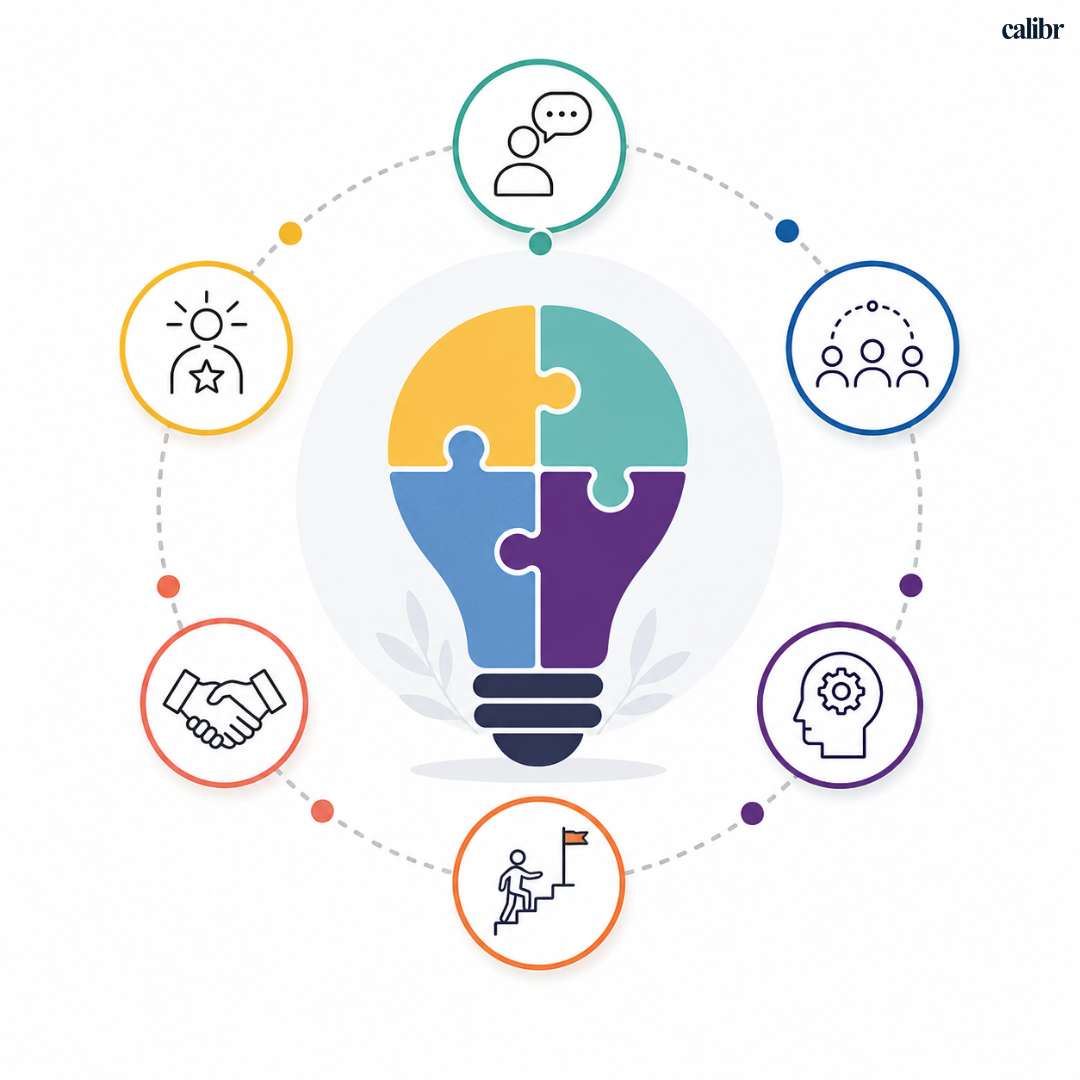
Before preparing for soft skills interview questions, it's important to understand the soft skill meaning. Soft skills are the personal, interpersonal, and behavioral abilities that influence how you communicate, collaborate, solve problems, and adapt in the workplace. Unlike hard skills, they focus on how you work with others rather than your technical expertise.
Some common examples of soft skills include communication, teamwork, leadership, adaptability, problem-solving, emotional intelligence, critical thinking, time management, conflict resolution, and active listening.
Together, these skills help professionals build strong relationships, overcome workplace challenges, and contribute to organizational success.
Why Do Employers Ask Soft Skills Interview Questions?
A resume tells employers what you've done. Soft skills interview questions help them understand how you work with others, approach challenges, and respond to real workplace situations.
Technical skills can often be verified through certifications, assessments, or previous experience. Soft skills, however, are best evaluated through conversation and real-life examples. That's why interviewers ask questions that reveal how you communicate, collaborate, solve problems, manage conflict, or adapt to change.
The National Association of Colleges and Employers (NACE) found that employers rank communication (96.1%), critical thinking (96.1%), and teamwork (93.9%) among the most important career readiness competencies when evaluating candidates.
These soft skills questions also help employers determine whether you'll fit the role beyond its technical requirements. They want to understand how you handle pressure, work with different personalities, accept feedback, and contribute to a positive team environment.
For example, instead of asking, "Are you a good communicator?", an interviewer is more likely to ask:
"Tell me about a time you had to resolve a disagreement with a coworker."
Your response gives insight into your communication style, emotional intelligence, decision-making, and professionalism—qualities that are difficult to measure from a resume alone.
Most soft skills interview questions are behavioral or situational, encouraging candidates to share specific examples from past experiences. Employers value authentic, structured responses because they provide a clearer picture of how you'll perform in similar situations if hired.
Ultimately, employers aren't looking for perfect answers. They're looking for genuine examples that demonstrate how you've applied examples of soft skills to solve problems, build relationships, and achieve positive outcomes in the workplace.
How to Approach Soft Skills Interview Questions (General Tips)
Before diving into these soft skills interview questions, keep these tips in mind to make your answers more impactful:
Use real examples from your work, academic, or volunteer experience.
Follow the STAR method (Situation, Task, Action, Result) to structure your responses.
Be honest and authentic—interviewers value genuine experiences over scripted answers.
Highlight the outcome by explaining what you achieved and what you learned.
Keep your answers concise, focusing on the skills most relevant to the role.
Soft Skills Interview Questions and Answers
Technical skills get you the interview, but soft skills get you the offer. Employers ask behavioral questions around soft skills to predict how you'll communicate, handle stress, resolve conflict, and lead without authority.
Now, let's explore 30+ soft skills interview questions grouped by key workplace competencies, along with why employers ask them and how to answer them effectively.

Communication Skills
1. Tell me about a time you had to explain a complex idea to someone who wasn't familiar with the topic.
Why employers ask this:
To evaluate your communication skills, clarity, and ability to adapt your message to different audiences.
How to answer:
Describe the situation, explain how you simplified the information, and share the outcome. Focus on making the message understandable rather than using technical jargon.
Sample Answer:
"While working on a project, I needed to explain a new reporting system to team members who had never used it before. Instead of using technical terms, I demonstrated the process step by step with real examples and answered their questions throughout the session. As a result, the team quickly understood the system and was able to use it confidently with minimal follow-up support."
2. Describe a situation where you had to deal with a misunderstanding at work.
Why employers ask this:
To assess your communication skills, conflict resolution skills, and professionalism.
How to answer:
Explain what caused the misunderstanding, how you addressed it respectfully, and what you did to prevent similar issues in the future.
Sample Answer:
"A teammate misunderstood my responsibilities on a shared project, which caused some duplicate work. I scheduled a quick discussion to clarify our roles, listened to their concerns, and updated our task assignments. We improved our communication afterward, and the project was completed on schedule without further confusion."
3. How do you handle difficult conversations with colleagues or clients?
Why employers ask this:
To understand your emotional intelligence and ability to maintain professional relationships.
How to answer:
Show that you stay calm, listen actively, focus on solutions, and communicate respectfully even in challenging situations.
Sample Answer:
"When a client was unhappy with a project delay, I listened carefully to their concerns before responding. I acknowledged their frustration, explained the reason for the delay, and proposed a revised timeline with regular progress updates. The client appreciated the transparency, and we successfully completed the project while maintaining a positive relationship."
4. Tell me about a presentation or meeting that went particularly well.
Why employers ask this:
To evaluate your confidence, preparation, and public speaking skills.
How to answer:
Describe the objective, how you prepared, how you engaged your audience, and the positive results or feedback you received.
Sample Answer:
"I was asked to present quarterly project updates to multiple departments. I prepared clear visuals, focused on the key insights, and left time for questions. The presentation generated productive discussions, and several of my recommendations were approved for implementation."
5. How do you ensure everyone understands your message when working with different teams?
Why employers ask this:
To assess your collaboration and workplace communication skills.
How to answer:
Explain how you adapt your communication style, encourage questions, confirm understanding, and follow up when needed.
Sample Answer:
"I adjust my communication based on the audience. For technical teams, I provide detailed information, while for non-technical stakeholders I focus on business outcomes and simple explanations. I also summarize key decisions in writing and encourage questions to confirm everyone has the same understanding."
Teamwork & Collaboration Skills
6. Tell me about a time you worked successfully as part of a team.
Why employers ask this:
To understand how you collaborate, contribute, and support shared goals.
How to answer:
Describe your role within the team, how you worked with others, and the outcome achieved through collaboration.
Sample Answer:
"During a product launch, I collaborated with colleagues from marketing, sales, and operations. We held regular progress meetings, shared updates openly, and supported each other whenever challenges arose. Our teamwork helped us launch the project successfully and meet all key deadlines."
7. Describe a time when you had a disagreement with a teammate.
Why employers ask this
To evaluate your conflict resolution, professionalism, and interpersonal skills.
How to answer:
Focus on how you listened to different perspectives, discussed the issue respectfully, found common ground, and maintained a positive working relationship.
Sample Answer:
"A teammate and I had different opinions about how to prioritize project tasks. Instead of arguing, we discussed the pros and cons of each approach and reviewed the project goals together. We agreed on a solution that combined both ideas, which improved the workflow and strengthened our working relationship."
8. Tell me about a time you helped a coworker succeed.
Why employers ask this:
To assess your willingness to support others and contribute to team success.
How to answer:
Share a specific example where your assistance helped a colleague overcome a challenge or complete an important task,and explain the impact on the team.
Sample Answer:
"A new team member was unfamiliar with one of our internal processes and was finding it difficult to complete assigned tasks. I volunteered to walk them through the workflow, shared helpful resources, and answered their questions over the next few days. They quickly became more confident, completed their work independently, and our team maintained its project timeline without delays."
9. How do you handle working with people who have different working styles?
Why employers ask this:
To determine your adaptability, collaboration skills, and ability to work with diverse personalities.
How to answer
Explain how you remain flexible, respect different perspectives, communicate openly, and adjust your approach to achieve common goals.
Sample Answer:
"In one project, I worked with colleagues who preferred different approaches—some liked detailed planning, while others preferred moving quickly and adjusting as they went. I adapted by agreeing on shared goals, maintaining regular communication, and respecting each person's working style. This helped us collaborate effectively, avoid misunderstandings, and successfully deliver the project on time."
10. Tell me about a project where teamwork played a critical role in success.
Why employers ask this:
To understand how you contribute to group efforts and work toward shared objectives.
How to answer:
Describe the project, your specific responsibilities, how the team collaborated, and the successful outcome. Highlight your contribution while recognizing the team's collective effort.
Sample Answer:
"During a company-wide process improvement project, I worked with colleagues from different departments to streamline our workflow. My responsibility was to gather feedback, coordinate updates, and ensure everyone stayed informed. Through regular meetings and open communication, we resolved issues quickly and completed the project ahead of schedule. The improved process reduced delays and strengthened collaboration across the team."
Leadership Skills
11. Tell me about a time you took the lead on a project.
Why employers ask this
To evaluate your leadership skills, initiative, and decision-making abilities.
How to answer:
Describe the project, explain why you stepped into a leadership role, outline the actions you took, and highlight the positive outcome.
Sample Answer:
"During a product launch, our project lead became unavailable unexpectedly, so I stepped in to coordinate the team's activities. I organized daily check-ins, assigned tasks based on each team member's strengths, and kept stakeholders updated on our progress. By maintaining clear communication and resolving issues quickly, we successfully launched the project on schedule."
12. Describe a time you motivated a team during a difficult situation.
Why employers ask this:
To understand how you inspire others and maintain team morale under pressure.
How to answer:
Share how you encouraged your teammates, kept everyone focused, and helped the team achieve its objective.
Sample Answer:
"Our team was working under a tight deadline after unexpected project changes. I encouraged everyone by breaking the work into manageable tasks, celebrating small milestones, and offering support whenever someone needed help. By staying positive and keeping communication open, we maintained team morale and delivered the project successfully before the deadline."
13. Have you ever delegated work to others? How did you approach it?
Why employers ask this:
To assess your ability to manage responsibilities and trust team members appropriately.
How to answer:
Explain how you matched tasks to individual strengths, communicated expectations clearly, and monitored progress without micromanaging.
Sample Answer:
"While leading a team project, I delegated tasks based on each person's skills and experience. I clearly explained expectations, agreed on deadlines, and scheduled regular progress updates to address any challenges. This approach kept everyone accountable, improved collaboration, and helped us complete the project efficiently."
14. Tell me about a time you made a difficult decision.
Why employers ask this:
To evaluate your judgment, accountability, and problem-solving skills.
How to answer:
Describe the situation, explain the factors you considered, discuss the decision you made, and share the results.
Sample Answer:
"During a project, I realized we wouldn't meet the deadline if we continued with our original plan. After reviewing the risks, I recommended reducing lower-priority features so the team could focus on the most critical deliverables. Although it was a difficult decision, we met the deadline, satisfied the client, and completed the remaining enhancements in the following phase."
15. How do you handle giving constructive feedback?
Why employers ask this:
To assess your communication, empathy, and leadership skills.
How to answer:
Explain how you provide feedback respectfully, focus on improvement, and encourage open conversations rather than criticism.
Sample Answer:
"I believe constructive feedback should be specific, respectful, and solution-oriented. For example, when a colleague was struggling with documentation quality, I privately discussed what was working well, pointed out areas for improvement with examples, and suggested practical ways to make the documents clearer. We also agreed on a follow-up review, and their documentation improved significantly over the following weeks."
Adaptability & Problem-Solving Skills
16. Tell me about a time you had to adapt quickly to a major change.
Why employers ask this:
To evaluate your flexibility and ability to perform in changing environments.
How to answer:
Describe the change, explain how you adjusted your approach, and share the positive outcome.
Sample Answer:
"Our team was asked to switch to a new project management system with very little notice. I took time to learn the new platform, attended training sessions, and shared helpful tips with my teammates. By adapting quickly and supporting others, our team continued meeting deadlines with minimal disruption."
17. Describe a challenging problem you solved at work.
Why employers ask this:
To understand your analytical thinking and problem-solving process.
How to answer:
Walk through how you identified the issue, evaluated possible solutions, implemented your approach, and measured success.
Sample Answer:
"A recurring issue was causing delays in our reporting process. I analyzed the workflow, identified a manual step that could be automated, and suggested a more efficient process. After implementing the change, reporting time was reduced significantly, allowing the team to focus on higher-value tasks."
18. Tell me about a mistake you made and what you learned from it.
Why employers ask this:
To assess accountability, self-awareness, and willingness to learn.
How to answer:
Be honest about the mistake, explain how you corrected it, and focus on the lessons that improved your future performance.
Sample Answer:
"Early in my career, I underestimated the time needed to complete a project task and missed an internal deadline. I informed my manager immediately, worked with the team to adjust priorities, and completed the work as quickly as possible. Since then, I've improved my planning by breaking tasks into smaller milestones and communicating potential delays early."
19. How do you prioritize multiple deadlines?
Why employers ask this:
To evaluate your organization, time management, and ability to work under pressure.
How to answer:
Explain how you assess priorities, plan your workload, communicate expectations, and stay organized when managing competing tasks.
Sample Answer:
"When I have multiple deadlines, I first assess each task based on urgency, business impact, and dependencies. I create a prioritized task list, set realistic timelines, and regularly review my progress. If priorities change, I communicate proactively with stakeholders to ensure expectations remain aligned and deadlines are met."
20. Describe a time when something didn't go as planned.
Why employers ask this:
To understand your resilience, adaptability, and response to setbacks.
How to answer:
Explain what happened, how you adjusted your approach, and what the experience taught you about handling unexpected challenges.
Sample Answer:
"During a project, a key supplier delivered critical materials later than expected, putting our timeline at risk. I worked with the team to adjust the schedule, reorganize tasks, and focus on activities that could continue while we waited. Although the situation was unexpected, we minimized delays and successfully completed the project."
Emotional Intelligence & Interpersonal Skills
21. Tell me about a time you had to handle a conflict with a coworker.
Why employers ask this
To assess your emotional intelligence, communication, and conflict resolution skills.
How to answer:
Explain how you stayed calm, listened to the other person's perspective, worked toward a solution, and maintained a professional relationship.
Sample Answer:
"A coworker and I disagreed on how to approach a project task. Instead of letting the disagreement affect our work, I arranged a one-on-one discussion where we shared our perspectives. We identified a solution that combined the strengths of both ideas, completed the project successfully, and continued working together effectively."
22. Describe a situation where you received constructive criticism.
Why employers ask this:
To evaluate your self-awareness, openness to feedback, and willingness to improve.
How to answer:
Share how you accepted the feedback professionally, implemented changes, and improved your performance as a result.
Sample Answer:
"My manager once suggested that I provide more frequent updates during long-term projects. I appreciated the feedback and began sending regular progress reports to stakeholders. This improved communication, reduced unnecessary follow-up questions, and strengthened trust within the team."
23. Tell me about a time you had to build trust with a new team.
Why employers ask this:
To understand your relationship-building and collaboration skills.
How to answer:
Describe how you communicated openly, delivered on commitments, supported teammates, and earned their confidence over time.
Sample Answer:
"When I joined a new team, I made an effort to understand everyone's responsibilities and communication preferences. I consistently met my deadlines, shared information openly, and volunteered to help whenever needed. Over time, my teammates trusted me with larger responsibilities and collaborative projects."
24. Have you ever worked with someone who had a very different personality from yours?
Why employers ask this:
To assess your adaptability and ability to work with diverse people.
How to answer:
Explain how you respected different perspectives, adjusted your communication style, and built a productive working relationship.
Sample Answer:
"I once worked with a colleague who preferred making quick decisions, while I liked to analyze every detail. We agreed to discuss key decisions together before moving forward and respected each other's strengths. This balanced approach helped us make better decisions and complete the project successfully."
25. Tell me about a time you helped resolve tension within a team.
Why employers ask this:
To evaluate your interpersonal skills and ability to promote teamwork.
How to answer:
Describe the situation, your role in encouraging open communication, and how your actions helped the team move forward.
Sample Answer:
"During a busy project, communication issues created tension between two team members. I encouraged an open discussion where everyone could share their concerns respectfully. Together, we clarified responsibilities and agreed on a better communication process. The atmosphere improved, and the team was able to focus on delivering the project successfully."
Time Management & Professionalism
26. How do you manage competing priorities?
Why employers ask this:
To assess your planning, organization, and ability to meet deadlines.
How to answer:
Explain how you prioritize tasks based on urgency and impact, use planning tools, and communicate proactively when priorities change.
Sample Answer:
"When I have multiple priorities, I start by assessing each task based on its urgency, business impact, and deadline. I create a prioritized task list, break larger projects into manageable steps, and review my progress regularly. If priorities shift unexpectedly, I communicate with stakeholders early to realign expectations and ensure critical deadlines are still met."
27. Tell me about a time you worked under pressure.
Why employers ask this:
To understand how you perform in demanding situations.
How to answer
Describe the challenge, how you stayed focused, managed your workload, and successfully delivered the required outcome.
Sample Answer:
"During a major client project, we encountered unexpected changes just a few days before the deadline. I stayed organized by prioritizing the most important tasks, coordinated closely with my teammates, and maintained clear communication with stakeholders. Despite the tight timeline, we delivered the project on time, and the client was satisfied with the final result."
28. Describe a time you went above and beyond your job responsibilities.
Why employers ask this:
To evaluate your initiative, work ethic, and commitment.
How to answer:
Share a genuine example where you voluntarily took additional responsibility and explain the positive impact on the team or organization.
Sample Answer:
"When a colleague was unexpectedly absent during an important project, I volunteered to take on some of their responsibilities while managing my own workload. I coordinated with the team, ensured deadlines were met, and kept everyone informed of progress. My additional support helped the project stay on schedule and minimized disruption for both the team and the client."
29. Tell me about a goal you set for yourself and how you achieved it.
Why employers ask this:
To assess your self-motivation, planning, and perseverance.
How to answer:
Explain the goal, the steps you took, any obstacles you faced, and the measurable results you achieved.
Sample Answer:
"I wanted to improve my presentation skills because I knew they would help me communicate more effectively. I volunteered to present during team meetings, practiced regularly, and asked for feedback after each presentation. Over time, my confidence grew, and I was trusted to deliver presentations to larger groups and senior stakeholders."
30. Why should we hire you for this role?
Why employers ask this:
To understand how well you can connect your skills, experience, and strengths to the requirements of the role.
How to answer:
Summarize your relevant experience, highlight your strongest soft skills, and explain how you can contribute to the organization's goals with confidence and authenticity.
Sample Answer:
"I believe I'm a strong fit for this role because I combine the required technical knowledge with strong soft skills such as communication, teamwork, adaptability, and problem-solving. I enjoy collaborating with others, learning new skills, and taking ownership of my work. I'm confident I can contribute positively to your team, adapt quickly to new challenges, and help the organization achieve its goals."
Common Mistakes to Avoid When Answering Soft Skills Interview Questions
Even candidates with strong experience can lose opportunities by giving vague or poorly structured responses. Avoid these common mistakes to present yourself with confidence and make a stronger impression during your interview.
Common Mistake | What to Do Instead |
|---|---|
Giving generic answers | Use specific examples from your own experience to demonstrate your skills. |
Speaking negatively about previous employers or colleagues | Stay professional and focus on how you resolved challenges or learned from the situation. |
Memorizing scripted answers | Understand the key points you want to communicate, but answer naturally and authentically. |
Ignoring the STAR method | Structure your response using the Situation, Task, Action, and Result framework for clarity. |
Focusing only on the outcome | Explain your thought process, actions, and what you learned from the experience. |
Claiming skills without evidence | Support your answers with real workplace examples that show your abilities in action. |
Talking too much or too little | Keep your answers concise, relevant, and focused on the question being asked. |
The goal isn't to deliver the "perfect" answer—it's to show interviewers how you've applied your skills in real workplace situations. Authentic, well-structured responses backed by genuine experiences are far more convincing than rehearsed or overly generic answers.
Final Thoughts
Preparing for soft skills interview questions isn't about memorizing responses—it's about reflecting on your real experiences and communicating them with confidence. By understanding what employers are looking for and practicing clear, structured answers, you can demonstrate the communication, teamwork, adaptability, and leadership qualities that organizations value most. The more authentic and relevant your examples, the more memorable your interview performance will be.
Frequently Asked Questions (FAQs)
What are soft skills interview questions?
Soft skills interview questions assess how you communicate, collaborate, solve problems, adapt to change, and work with others in professional environments.1. What are soft skills interview questions?
Why do employers ask soft skills interview questions?
They help employers evaluate your behavior, interpersonal abilities, and how you're likely to perform in real workplace situations beyond your technical expertise.
What are some examples of soft skills?
Common examples include communication, teamwork, leadership, emotional intelligence, adaptability, problem-solving, conflict resolution, time management, and critical thinking.
What is the best way to answer soft skills interview questions?
Use real-life examples and structure your responses with the STAR method (Situation, Task, Action, Result) to provide clear and relevant answers.
Can soft skills be improved?
Yes. Soft skills can be developed through regular practice, feedback, coaching, mentoring, and workplace experience.
What's the difference between soft skills and hard skills?
Hard skills are technical, measurable abilities learned through education or training, while soft skills relate to how you communicate, collaborate, lead, and interact with others.


Vivetha is a digital marketing professional specializing in content marketing and SEO. She focuses on developing optimized, high-quality content that improves search visibility, supports brand objectives, and drives measurable results. With a structured and analytical approach, she ensures content aligns with business and audience needs.