Workplace accidents can result in injuries, lost productivity, financial losses, and operational disruptions.
Common workplace accidents include slips and falls, lifting injuries, machinery accidents, electrical incidents, and exposure to harmful substances.
Understanding the causes and impact of workplace accidents helps organizations identify risks and take preventive action.
Many workplace accidents can be prevented through hazard identification, workplace safety training, regular inspections, and safe work practices.
Building a strong safety culture through employee involvement, continuous learning, and proactive risk management can help create a safer work environment.
What Is a Workplace Accident?
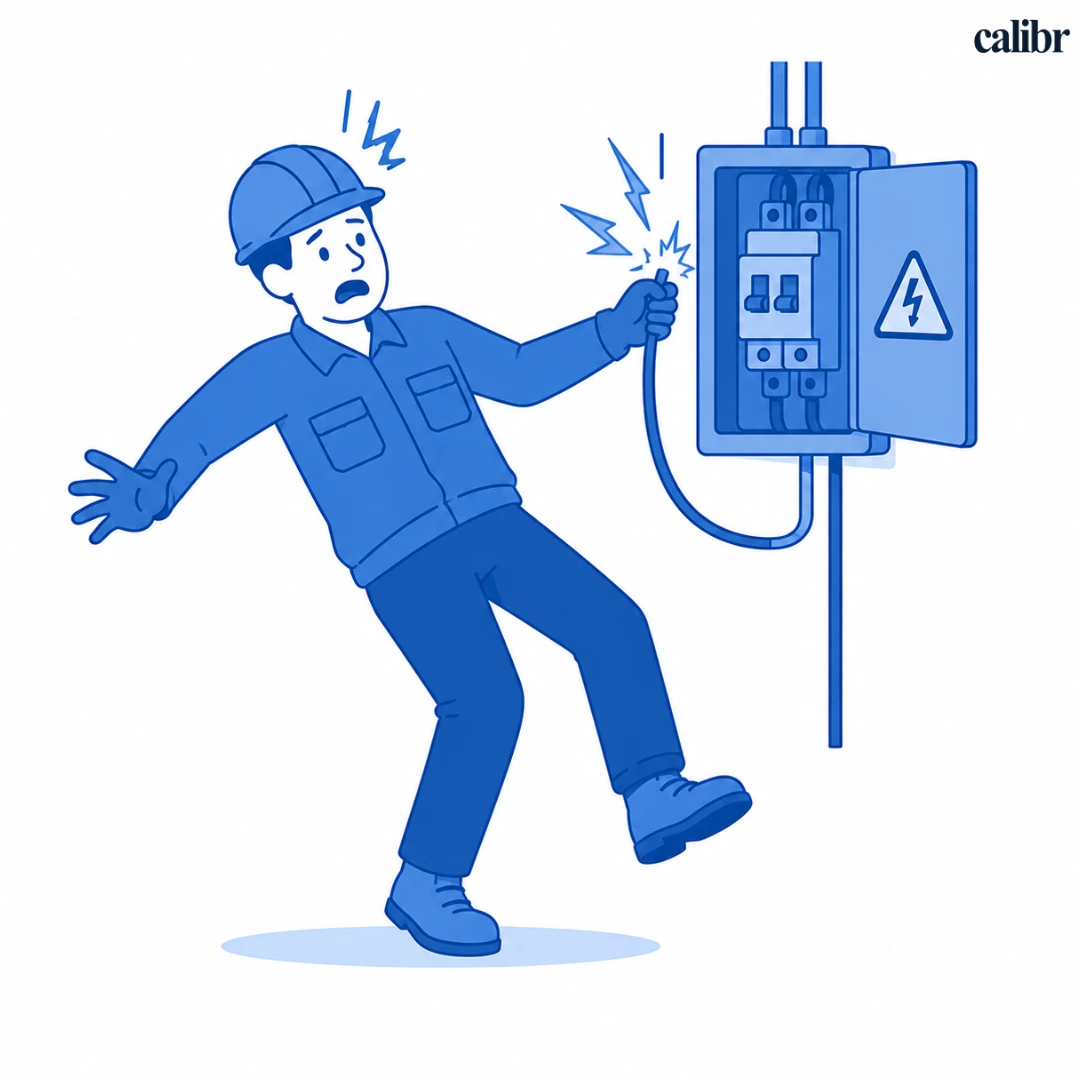
A workplace accident is an unplanned event that occurs during work and results in injury, illness, damage, or disruption to operations.
Understanding related workplace safety terms can help organizations identify risks, report incidents accurately, and improve accident prevention efforts.
Term | Definition |
|---|---|
Workplace Accident | An unexpected event at work that causes injury, illness, property damage, or operational disruption. |
Workplace Injury | Physical or psychological harm suffered by an employee due to a workplace accident or work activity. |
Workplace Incident | Any unplanned workplace event, whether or not it results in an injury or loss. |
Near Miss | An event that could have caused injury, illness, or damage but did not result in harm. |
Occupational Illness | A health condition caused or worsened by workplace exposure, such as respiratory diseases or hearing loss. |
Lost-Time Injury (LTI) | A workplace injury that prevents an employee from performing their regular work duties for at least one shift or workday. |
Why Workplace Safety is Important?
Workplace accidents can have far-reaching consequences for both employees and organizations. Beyond physical injuries, they can disrupt operations, increase costs, and affect employee confidence.
Understanding why workplace safety is important can help organizations take proactive steps to prevent accidents and create a safer work environment.
According to the World Health Organization (WHO), healthy and safe workplaces contribute to improved employee well-being, productivity, and overall organizational performance.
Impact Area | Potential Consequences |
|---|---|
Employee Injuries | Physical harm, long-term health issues, and reduced well-being |
Lost Productivity | Work stoppages, project delays, and operational disruptions |
Financial Losses | Medical expenses, compensation claims, and repair costs |
Legal Consequences | Regulatory penalties, compliance issues, and legal claims |
Reputation Damage | Reduced trust among employees, customers, and stakeholders |
Lower Employee Morale | Increased stress, reduced engagement, and lower job satisfaction |
When workplace accidents are not addressed, their impact often extends beyond the individuals involved. By prioritizing workplace safety training, organizations can protect employees, reduce risks, improve productivity, and build a stronger safety culture.
10 Common Types of Workplace Accidents
Workplace accidents can occur in any industry, from offices and warehouses to construction sites and manufacturing facilities.
While workplace hazards and risks may vary depending on the work environment, certain types of workplace accidents are consistently reported across organizations.
Understanding these common workplace accidents and the hazards that contribute to them can help employers and employees identify risks early and strengthen workplace safety efforts.
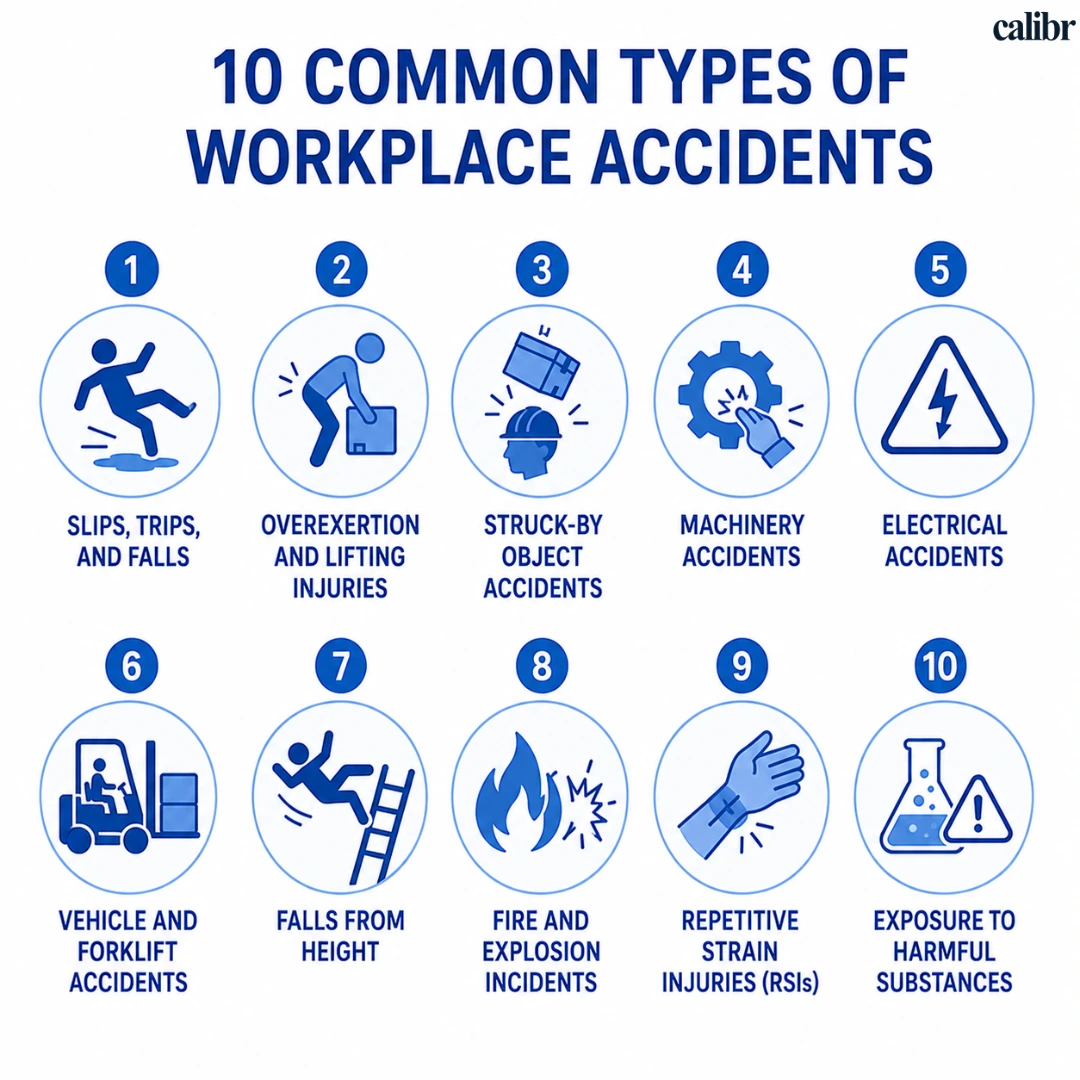
1. Slips, Trips, and Falls
Slips, trips, and falls are workplace accidents that occur when an employee loses balance due to slippery surfaces, obstacles, uneven flooring, or other hazards in the work environment. According to OSHA, slips, trips, and falls are among the most common causes of workplace injuries and remain a significant safety concern across industries.
Where does it happen?
Offices
Warehouses
Retail stores
Hospitals
Construction sites
Example
An employee walking through a busy office corridor slips on a wet floor that was not clearly marked. The fall results in an ankle injury, requiring medical treatment and several days away from work.
Impact
Slips, trips, and falls can cause sprains, fractures, and head injuries. Beyond the injured employee, these incidents may lead to lost work hours, reduced productivity, increased medical expenses, and disruptions to normal business operations.
2. Overexertion and Lifting Injuries
Overexertion injuries occur when employees place excessive physical strain on their bodies while performing work-related tasks. These injuries often affect muscles, joints, tendons, and ligaments and are particularly common in physically demanding roles. In many cases, the effects can last for weeks or even months.
Where does it happen?
Warehouses
Manufacturing facilities
Construction sites
Logistics centers
Healthcare settings
Example
A warehouse employee lifts a heavy package without assistance and experiences severe lower back pain. The injury limits their ability to perform regular duties and requires time away from work for recovery.
Impact
Overexertion injuries can result in chronic pain, reduced mobility, and long recovery periods. Organizations may face increased absenteeism, lower productivity, higher compensation costs, and additional pressure on other team members.
3. Struck-By Object Accidents
Struck-by object accidents occur when employees are hit by moving, falling, flying, or swinging objects. These incidents are particularly common in environments where materials, tools, equipment, or vehicles are frequently in motion.
Depending on the object involved, injuries can range from minor to life-threatening.
Where does it happen?
Construction sites
Warehouses
Manufacturing plants
Shipping yards
Industrial facilities
Example
A worker is organizing inventory when a box falls from an upper storage rack and strikes their shoulder. The employee suffers an injury that requires medical attention and temporary work restrictions.
Impact
These accidents can lead to fractures, head injuries, bruises, and other serious physical harm. They may also cause work stoppages, investigation costs, project delays, and increased safety concerns among employees.
4. Machinery Accidents
Machinery accidents involve injuries caused by industrial equipment, moving machine parts, or mechanical systems used in daily operations. These incidents are often among the most severe workplace accidents due to the power and complexity of the equipment involved. Proper safeguards and training are critical in environments where machinery is used regularly.
Where does it happen?
Factories
Manufacturing facilities
Workshops
Construction sites
Processing plants
Example
An employee operating industrial equipment suffers a hand injury while interacting with a machine during production activities. The incident results in medical treatment and temporary production delays.
Impact
Machinery accidents can cause severe injuries, permanent disabilities, or long-term health complications. In addition to affecting employees, they can result in equipment damage, operational downtime, financial losses, and compliance concerns.
5. Electrical Accidents
Electrical accidents occur when employees come into contact with electrical hazards during work activities. These incidents can involve electrical shocks, burns, arc flashes, or fires and are often associated with equipment, power systems, or maintenance tasks. Even brief exposure to electrical hazards can have serious consequences.
Where does it happen?
Construction sites
Manufacturing facilities
Maintenance operations
Utility sectors
Commercial buildings
Example
A maintenance technician receives an electric shock while inspecting equipment with an undetected electrical fault. The incident requires immediate medical attention and temporarily halts nearby operations.
Impact
Electrical accidents can result in burns, nerve damage, cardiac complications, and other serious injuries. Organizations may also face equipment damage, operational interruptions, repair costs, and potential fire-related risks.
6. Vehicle and Forklift Accidents
Vehicle and forklift accidents occur when workplace vehicles collide with people, equipment, structures, or other vehicles. These incidents can happen in busy work environments where materials and personnel move through shared spaces. Because of the size and weight of workplace vehicles, even low-speed accidents can result in serious consequences.
Where does it happen?
Warehouses
Distribution centers
Manufacturing facilities
Construction sites
Logistics hubs
Example
A forklift transporting materials collides with a storage rack while turning through a narrow aisle. The impact damages inventory and causes injuries to a nearby employee.
Impact
Vehicle and forklift accidents can lead to serious injuries, property damage, and operational delays. They may also result in equipment repair costs, inventory losses, and increased safety concerns among employees.
7. Falls From Height
Falls from height occur when employees fall from elevated work areas such as ladders, scaffolding, roofs, platforms, or elevated structures.
These accidents remain one of the leading causes of serious workplace injuries and fatalities in many industries. The severity of injuries often increases with the height involved.
Where does it happen?
Construction sites
Maintenance projects
Warehouses
Industrial facilities
Telecommunications and utility sectors
Example
A maintenance worker falls from a ladder while performing repair work at an elevated location. The incident results in multiple injuries and requires immediate medical attention.
Impact
Falls from height can cause fractures, spinal injuries, head trauma, and long-term disabilities. In severe cases, they may result in fatalities, project delays, legal consequences, and significant financial losses for organizations.
8. Fire and Explosion Incidents
Fire and explosion incidents occur when heat, combustible materials, or hazardous substances ignite unexpectedly. Although less frequent than some other workplace accidents, they can have devastating consequences for employees, facilities, and business operations. These incidents often require emergency response and can affect large areas within a workplace.
Where does it happen?
Manufacturing facilities
Chemical plants
Warehouses
Construction sites
Energy and utility sectors
Example
A workplace fire breaks out after a malfunctioning electrical system ignites nearby materials. Employees are evacuated while emergency responders work to contain the situation.
Impact
Fire and explosion incidents can cause severe burns, smoke inhalation injuries, property damage, and operational shutdowns. Organizations may also face costly repairs, business interruptions, and reputational challenges.
9. Repetitive Strain Injuries (RSIs)
Repetitive strain injuries develop gradually when employees perform the same motions repeatedly over extended periods. Unlike sudden workplace accidents, these injuries often build over time and may initially go unnoticed.
They can affect muscles, tendons, nerves, and joints, making everyday work tasks increasingly difficult.
Where does it happen?
Offices
Manufacturing facilities
Call centers
Healthcare settings
Retail environments
Example
An office employee who spends long hours typing and using a computer develops persistent wrist pain that eventually affects their ability to perform routine tasks comfortably.
Impact
Repetitive strain injuries can result in chronic pain, reduced mobility, and decreased productivity. Employees may require medical treatment, workplace adjustments, or time away from work to recover, creating additional costs for organizations.
10. Exposure to Harmful Substances
Exposure to harmful substances occurs when employees come into contact with hazardous chemicals, dust, fumes, gases, or other potentially dangerous materials during their work.
The effects may appear immediately or develop gradually over time, depending on the type and duration of exposure.
Where does it happen?
Manufacturing facilities
Laboratories
Construction sites
Mining operations
Healthcare environments
Example
An employee working in a poorly ventilated area is regularly exposed to hazardous fumes. Over time, the exposure contributes to respiratory health problems that require medical attention.
Impact
Exposure to harmful substances can lead to occupational illnesses, respiratory conditions, skin disorders, and other long-term health complications. Organizations may face increased healthcare costs, absenteeism, regulatory scrutiny, and workplace safety concerns.
How to Prevent Accidents in the Workplace
While workplace accidents can occur in any industry, many incidents are preventable with the right safety measures.
Understanding the common types of workplace accidents and taking proactive steps to address them can help organizations reduce risks, protect employees, and create a safer work environment.
Type of Workplace Accident | Common Causes | Prevention Strategies |
|---|---|---|
Slips, Trips, and Falls | Wet floors, cluttered walkways, poor lighting, uneven surfaces | Keep walkways clear, clean spills immediately, improve lighting, use warning signs |
Overexertion and Lifting Injuries | Improper lifting, repetitive physical tasks, handling heavy loads | Provide lifting training, use lifting equipment, encourage team lifting when needed |
Struck-By Object Accidents | Falling materials, unsecured loads, moving objects | Secure materials properly, use protective equipment, maintain safe storage practices |
Machinery Accidents | Unsafe equipment use, missing safeguards, inadequate training | Conduct regular inspections, provide equipment training, follow operating procedures |
Electrical Accidents | Damaged equipment, exposed wiring, overloaded circuits | Inspect equipment regularly, report electrical issues promptly, follow electrical safety guidelines |
Vehicle and Forklift Accidents | Poor visibility, operator errors, unsafe driving practices | Train operators, mark vehicle routes, enforce workplace traffic rules |
Falls From Height | Unsafe ladder use, lack of fall protection, unstable work surfaces | Use fall protection equipment, inspect ladders, follow height safety procedures |
Fire and Explosion Incidents | Faulty electrical systems, flammable materials, equipment failures | Store hazardous materials safely, maintain equipment, conduct fire safety training |
Repetitive Strain Injuries | Repetitive movements, poor ergonomics, prolonged physical stress | Improve workstation ergonomics, rotate tasks, encourage stretching and breaks |
Exposure to Harmful Substances | Chemical exposure, dust, fumes, poor ventilation | Use PPE, improve ventilation, follow safe handling procedures, provide hazard awareness training |
Workplace Accident Prevention Checklist
Organizations looking at how to prevent accidents in the workplace should focus on a few key safety practices. Using a workplace safety checklist regularly can help identify hazards, improve safety awareness, and support workplace accident prevention efforts.
Identify workplace hazards before incidents occur
Encourage employees to report safety concerns
Provide regular workplace safety training
Maintain equipment and tools properly
Keep work areas clean and organized
Ensure employees use appropriate PPE
Conduct routine safety inspections
Review and update safety procedures regularly
Investigate incidents and near misses
Promote a strong workplace safety culture
Understanding workplace accident prevention is one thing, but applying that knowledge is equally important. To test your understanding of workplace hazards, accident prevention strategies, and workplace safety best practices, explore our workplace safety quiz.
The SAFE Framework for Preventing Workplace Accident
Preventing workplace accidents requires more than reacting to incidents after they occur.
Organizations that take a proactive approach to workplace safety and workplace safety training are often better positioned to identify risks early and reduce the likelihood of accidents.
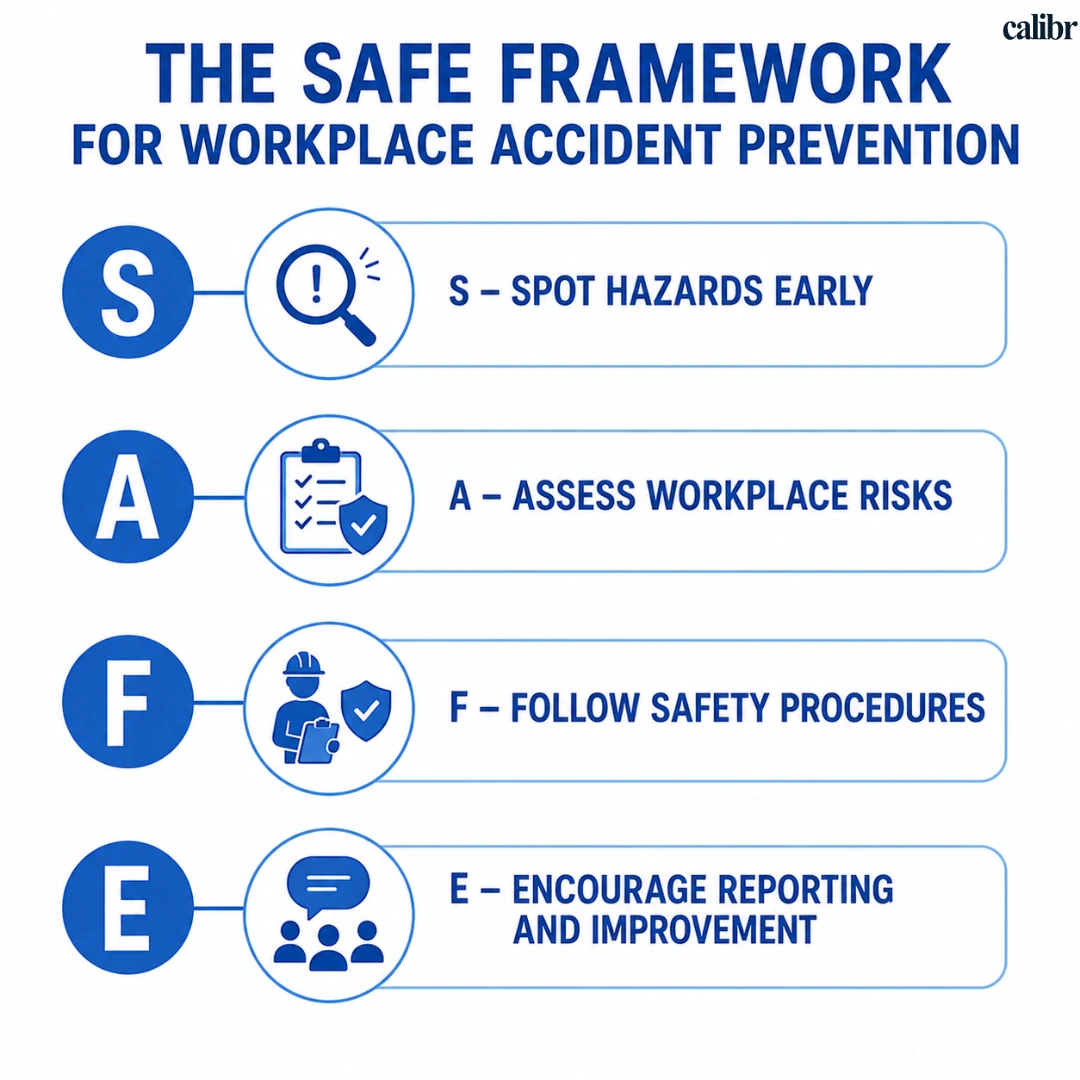
One simple way to remember the fundamentals of workplace accident prevention is the SAFE Framework.
SAFE Framework | What It Means |
|---|---|
S – Spot Hazards Early | Identify unsafe conditions, potential hazards, and workplace risks before they lead to incidents. |
A – Assess Workplace Risks | Evaluate how likely a hazard is to cause harm and determine the appropriate control measures. |
F – Follow Safety Procedures | Ensure employees consistently follow workplace safety guidelines, training, and established processes. |
E – Encourage Reporting and Improvement | Promote hazard reporting, learn from incidents, and continuously improve workplace safety practices. |
Frequently Asked Questions (FAQs)
What is the most common workplace accident?
Slips, trips, and falls are among the most common workplace accidents across industries. These incidents can occur in offices, warehouses, construction sites, and other work environments and often result in injuries, lost workdays, and reduced productivity.
What are the causes of workplace accidents?
Workplace accidents are often caused by unsafe conditions, human error, inadequate training, poor housekeeping, equipment issues, and failure to follow workplace safety procedures. Many incidents occur when workplace hazards are not identified or addressed promptly.
How can workplace accidents be prevented?
Organizations can help prevent workplace accidents by identifying hazards, providing safety training, maintaining equipment, encouraging hazard reporting, and promoting safe work practices. A proactive approach to workplace safety is often more effective than reacting after an incident occurs.
What is the difference between a workplace accident and a workplace incident?
A workplace accident results in injury, illness, property damage, or operational disruption. A workplace incident is any unplanned event that occurs at work, including events that do not result in injury or damage.
What industries experience the most workplace accidents?
Workplace accidents can occur in any industry, but they are more common in sectors such as construction, manufacturing, warehousing, transportation, healthcare, and logistics due to the nature of the work and the workplace hazards involved.
What should employees do after a workplace accident?
Employees should seek medical attention if necessary, report the accident immediately, document relevant details, and follow the organization's incident reporting procedures. Prompt reporting can help prevent similar incidents in the future.
How often should workplace safety training be conducted?
Workplace safety training should be provided during onboarding and reinforced regularly through refresher sessions, safety meetings, and training related to new equipment, procedures, or workplace risks.
Why is reporting accident important?
Reporting accident helps organizations identify workplace hazards, investigate root causes, and implement corrective actions. Effective reporting also supports workplace accident prevention and continuous safety improvement.
What is a near miss in workplace safety?
A near miss is an unplanned event that could have resulted in injury, illness, or property damage but did not. Reporting near misses helps organizations identify risks before a workplace accident occurs.
Why is workplace safety important?
Workplace safety helps protect employees from injuries, illnesses, and workplace hazards. It also supports productivity, reduces operational disruptions, lowers costs, and contributes to a stronger workplace safety culture.
Final Thoughts: Creating a Safer Work Environment
Preventing workplace accidents requires more than safety policies and procedures. Organizations that prioritize workplace safety focus on building a strong safety culture, providing ongoing training, encouraging hazard reporting, and continuously improving workplace practices.
When employees and leaders share responsibility for safety, workplaces are better equipped to reduce risks, prevent accidents, and support long-term business success.
Continuous learning also plays an important role in strengthening workplace safety. By providing employees with ongoing access to safety training, compliance learning, and hazard awareness programs, organizations can reinforce safe workplace behaviors and keep safety top of mind.
Platforms like Calibr can help reinforce workplace safety through AI powered learning experiences that support ongoing safety training and employee development.
Sign up now for free or contact our team for more details


Vivetha is a digital marketing professional specializing in content marketing and SEO. She focuses on developing optimized, high-quality content that improves search visibility, supports brand objectives, and drives measurable results. With a structured and analytical approach, she ensures content aligns with business and audience needs.