Workplace hazards are any conditions, substances, activities, or workplace factors that can cause injury, illness, property damage, or operational disruptions.
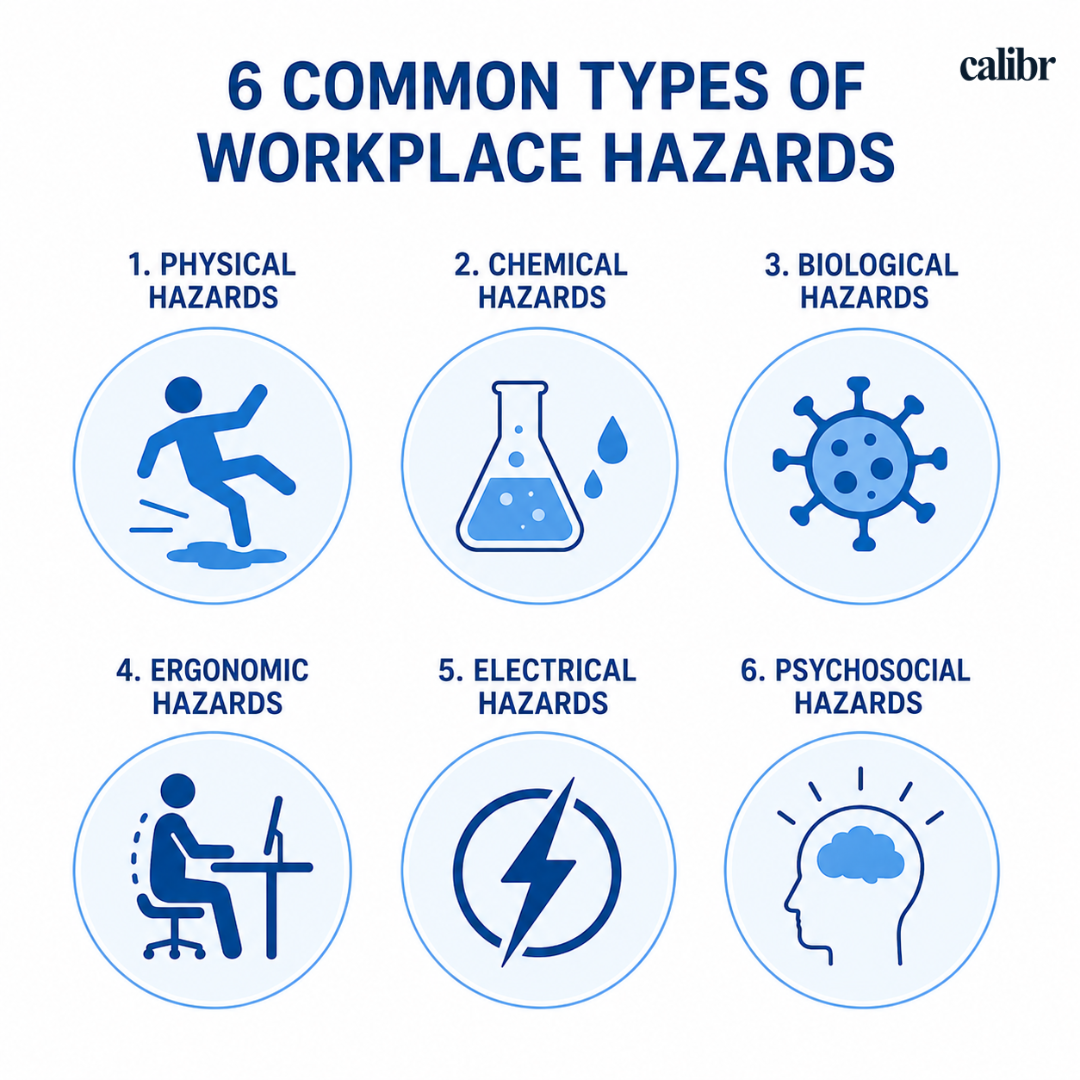
Common types of workplace hazards include physical, chemical, biological, ergonomic, electrical, and psychosocial hazards.
By identifying hazards early, implementing preventive measures, and promoting ongoing safety awareness, organizations can reduce risks, improve compliance, and create safer and more productive workplaces.
What Is a Workplace Hazard?
A workplace hazard is anything that has the potential to cause harm to employees, damage property, or disrupt operations. Hazards can exist in different forms, including unsafe conditions, harmful substances, workplace practices, equipment, or environmental factors.
Identifying workplace hazards early is an important step in preventing accidents and maintaining a safe work environment.
Why Is It Important to Identify Workplace Hazards?
Many workplace accidents begin with hazards that go unnoticed or are not addressed in time. Identifying workplace hazards early allows organizations to take corrective action before they result in injuries, operational disruptions, or costly incidents.
When workplace hazards are ignored, the consequences can extend beyond employee safety and affect overall business performance.
Impact Area | Potential Consequences |
|---|---|
Workplace Accidents | Increased risk of incidents, near misses, and injuries |
Employee Injuries | Physical harm, illness, and long-term health concerns |
Lost Productivity | Work disruptions, downtime, and reduced efficiency |
Compliance Issues | Regulatory violations and potential penalties |
Financial Losses | Medical expenses, compensation claims, and repair costs |
Reputation Damage | Reduced trust among employees, customers, and stakeholders |
By identifying and addressing workplace hazards proactively, organizations can reduce risks, strengthen workplace safety, and create a healthier and more productive work environment.
What Are the Most Common Types of Workplace Hazards?
Workplace hazards can exist in any industry and work environment. While the specific risks may vary, most workplace hazards fall into a few common categories. Understanding these hazards can help organizations identify risks early, prevent workplace accidents, and create a safer work environment for employees.
1. Physical Hazards in the Workplace
Physical hazards are environmental conditions that can cause injuries without necessarily involving direct contact with harmful substances. These hazards are among the most common workplace hazards and can be found across a wide range of industries.
Where does it occur?
Offices
Warehouses
Construction sites
Manufacturing facilities
Retail stores
Examples
Slippery floors
Poor lighting
Excessive noise
Falling objects
Uneven surfaces
Potential Impact
Physical hazards can lead to slips, trips, falls, hearing damage, cuts, fractures, and other workplace injuries. If left unaddressed, they may also increase absenteeism and disrupt daily operations.
2. Chemical Hazards in the Workplace
Chemical hazards arise when employees are exposed to substances that may cause harm through inhalation, skin contact, ingestion, or accidental spills. These hazards are particularly common in workplaces that handle chemicals, cleaning agents, fuels, or industrial materials.
Where does it occur?
Manufacturing facilities
Laboratories
Construction sites
Healthcare facilities
Cleaning and maintenance operations
Examples
Cleaning chemicals
Solvents
Paints
Gases
Industrial chemicals
Potential Impact
Chemical hazards can cause skin irritation, respiratory problems, burns, poisoning, and long-term health complications. Improper handling may also increase the risk of fires, explosions, and environmental damage.
3. Biological Hazards in the Workplace
Biological hazards involve exposure to living organisms or biological materials that may affect employee health. These hazards are particularly important in healthcare, laboratory, and public-facing environments.
Where does it occur?
Hospitals
Clinics
Laboratories
Food processing facilities
Waste management operations
Examples
Viruses
Bacteria
Mold
Fungi
Bodily fluids
Potential Impact
Biological hazards can result in infections, allergic reactions, respiratory conditions, and other health issues. In some cases, exposure may lead to outbreaks that affect multiple employees.
4. Ergonomic Hazards in the Workplace
Ergonomic hazards occur when workplace design, workstations, or job tasks place excessive strain on the body. These hazards often develop gradually and may not be immediately noticeable.
Where does it occur?
Offices
Warehouses
Manufacturing facilities
Healthcare settings
Retail environments
Examples
Poor workstation setup
Repetitive movements
Improper lifting
Awkward postures
Prolonged sitting
Potential Impact
Ergonomic hazards can contribute to back pain, neck strain, repetitive strain injuries, fatigue, and reduced productivity. Long-term exposure may result in chronic musculoskeletal disorders.
5. Electrical Hazards in the Workplace
Electrical hazards occur when employees come into contact with unsafe electrical systems, equipment, or installations. Even minor electrical issues can create significant safety risks if not addressed promptly.
Where does it occur?
Construction sites
Manufacturing facilities
Offices
Maintenance operations
Utility sectors
Examples
Exposed wiring
Damaged electrical equipment
Overloaded circuits
Faulty electrical connections
Improper use of electrical tools
Potential Impact
Electrical hazards can cause electric shocks, burns, fires, equipment damage, and serious workplace accidents. In severe cases, they may result in permanent injuries or fatalities.
6. Psychosocial Hazards in the Workplace
Psychosocial hazards are workplace factors that can negatively affect an employee's mental health, emotional well-being, and overall job satisfaction. These hazards are becoming increasingly important as organizations focus on employee well-being.
Where does it occur?
Offices
Customer service environments
Healthcare settings
Remote workplaces
High-pressure work environments
Examples
Excessive workload
Workplace bullying
Harassment
Job insecurity
Chronic stress
Potential Impact
Psychosocial hazards can contribute to stress, burnout, anxiety, reduced engagement, absenteeism, and lower productivity. Over time, they may also affect employee retention and workplace culture.
How to Identify Workplace Hazards and Prevent Them
Identifying workplace hazards early is one of the most effective ways to prevent accidents, injuries, and operational disruptions.
Understanding how to identify workplace hazards and implement appropriate prevention measures can help organizations reduce risks, improve compliance, and create a safer work environment for employees.
Hazard Type | How to Identify Workplace Hazards | How to Prevent Workplace Hazards |
|---|---|---|
Physical Hazards | Cluttered walkways, damaged flooring, poor lighting, excessive noise | Conduct regular inspections, maintain housekeeping, improve lighting |
Chemical Hazards | Leaks, spills, unusual odors, damaged containers | Store chemicals properly, provide PPE, follow safe handling procedures |
Biological Hazards | Mold growth, contamination, poor hygiene conditions | Maintain hygiene standards, improve sanitation, follow infection control measures |
Ergonomic Hazards | Employee discomfort, repetitive strain complaints, poor posture | Adjust workstations, encourage proper lifting techniques, provide ergonomic equipment |
Electrical Hazards | Exposed wiring, damaged equipment, overloaded outlets | Inspect equipment regularly, repair damaged wiring, follow electrical safety guidelines |
Psychosocial Hazards | Stress, burnout, workplace conflicts, declining morale | Manage workloads effectively, encourage open communication, provide employee support resources |
How to Manage Workplace Hazards Effectively
Identifying workplace hazards is only the first step. Organizations must also have processes in place to manage workplace hazards, reduce risks, and prevent incidents before they occur.
According to the UK's Health and Safety Executive (HSE), effective risk management involves identifying hazards, assessing risks, implementing appropriate controls, and regularly reviewing those controls to ensure they remain effective.
The following 5 practical tips can help organizations take a more proactive approach on managing workplace hazard effectively at workplace.
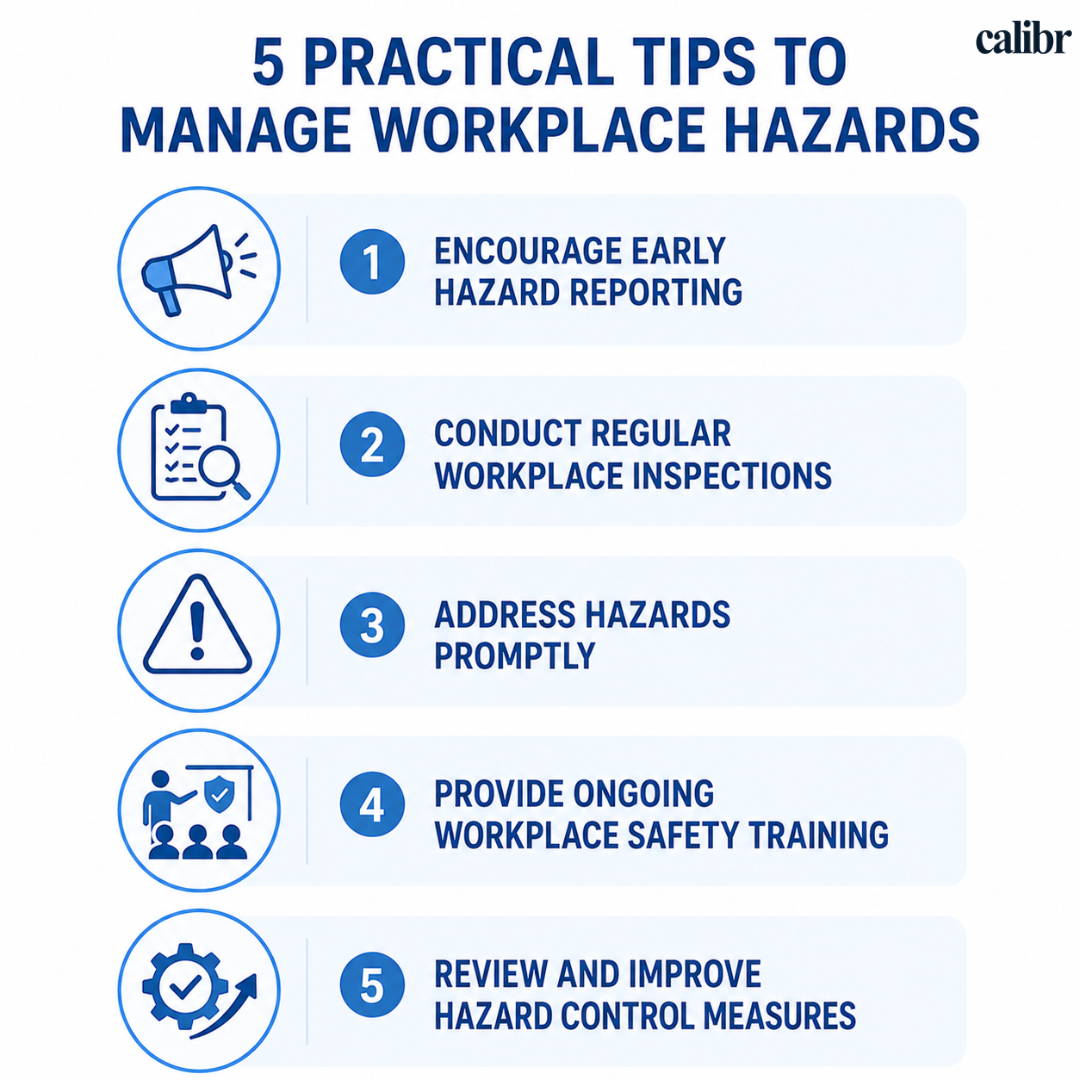
1. Encourage Early Hazard Reporting
Employees are often the first to notice unsafe conditions, damaged equipment, or emerging risks. Encouraging employees to report workplace hazards promptly allows organizations to address concerns before they lead to accidents or operational disruptions.
2. Conduct Regular Workplace Inspections
Routine inspections using a workplace safety checklist help organizations identify workplace hazards that may otherwise go unnoticed. Regular reviews of work areas, equipment, and safety procedures can improve hazard awareness and support ongoing workplace safety efforts.
3. Address Hazards Promptly
Identifying hazards is only effective when corrective action follows. Organizations should investigate reported hazards, prioritize high-risk issues, and implement appropriate control measures as quickly as possible.
4. Provide Ongoing Workplace Safety Training
Employees should understand how to recognize workplace hazards, follow safe work practices, and respond appropriately when risks are identified. Regular safety training helps reinforce safety awareness and improve hazard prevention efforts.
5. Review and Improve Hazard Control Measures
Workplace conditions, equipment, and processes can change over time. Organizations should regularly review existing hazard controls and make improvements where necessary to ensure workplace safety measures remain effective.
Frequently Asked Questions (FAQs)
What are the most common workplace hazards?
Common workplace hazards include physical, chemical, biological, ergonomic, electrical, and psychosocial hazards. These hazards can affect employee safety, health, and overall workplace performance.
What is the difference between a hazard and a risk?
A hazard is anything that has the potential to cause harm, while a risk is the likelihood that the hazard will result in injury, illness, or damage.
What are some common physical hazards in the workplace?
Common physical hazards include slippery floors, excessive noise, poor lighting, falling objects, extreme temperatures, and uneven walking surfaces.
What are some common chemical hazards in the workplace?
Common chemical hazards include cleaning agents, solvents, gases, paints, industrial chemicals, and other substances that may cause harm through exposure or improper handling.
What are some common biological hazards in the workplace?
Biological hazards include viruses, bacteria, mold, fungi, bodily fluids, and other biological materials that can affect employee health.
How can workplace hazards be identified?
Workplace hazards can be identified through regular inspections, employee observations, hazard reporting systems, workplace safety audits, and routine risk assessments.
How can organizations reduce workplace hazards?
Organizations can reduce workplace hazards by conducting inspections, providing safety training, maintaining equipment, improving housekeeping practices, and encouraging employees to report concerns promptly.
Why is hazard reporting important?
Hazard reporting helps organizations identify risks before incidents occur. It also supports workplace accident prevention, continuous improvement, and stronger workplace safety practices.
What is a workplace hazard assessment?
A workplace hazard assessment is the process of identifying potential hazards, evaluating risks, and determining appropriate control measures to reduce the likelihood of incidents.
Who is responsible for identifying workplace hazards?
Workplace safety is a shared responsibility. Managers, supervisors, safety teams, and employees all play an important role in identifying and addressing workplace hazards.
Final Thoughts
Workplace hazards exist in every industry, but many incidents can be prevented through awareness, early identification, and proactive safety practices.
By understanding common workplace hazards and addressing them before they lead to incidents, organizations can reduce workplace risks, strengthen workplace safety training, and create healthier, more productive work environments.
Continuous learning also plays an important role in hazard awareness and prevention. By providing employees with ongoing safety education and workplace safety training, organizations can reinforce safe behaviors and improve hazard recognition.
Platforms like Calibr can support these efforts through AI powered learning experiences that help employees build the knowledge and skills needed to contribute to a safer workplace. Sign up now for free or contact us for further details.


Vivetha is a digital marketing professional specializing in content marketing and SEO. She focuses on developing optimized, high-quality content that improves search visibility, supports brand objectives, and drives measurable results. With a structured and analytical approach, she ensures content aligns with business and audience needs.