What Is Workplace Safety?
Workplace safety refers to the policies, procedures, and practices used to protect employees from injuries, illnesses, and workplace hazards. It focuses on creating a work environment where employees can perform their duties safely and confidently.
Workplace safety is important because even a small hazard can lead to accidents, lost productivity, medical costs, and operational disruptions. By identifying and addressing risks early, organizations can help prevent workplace accidents and create a safer work environment for everyone.
What Is a Workplace Safety Checklist?
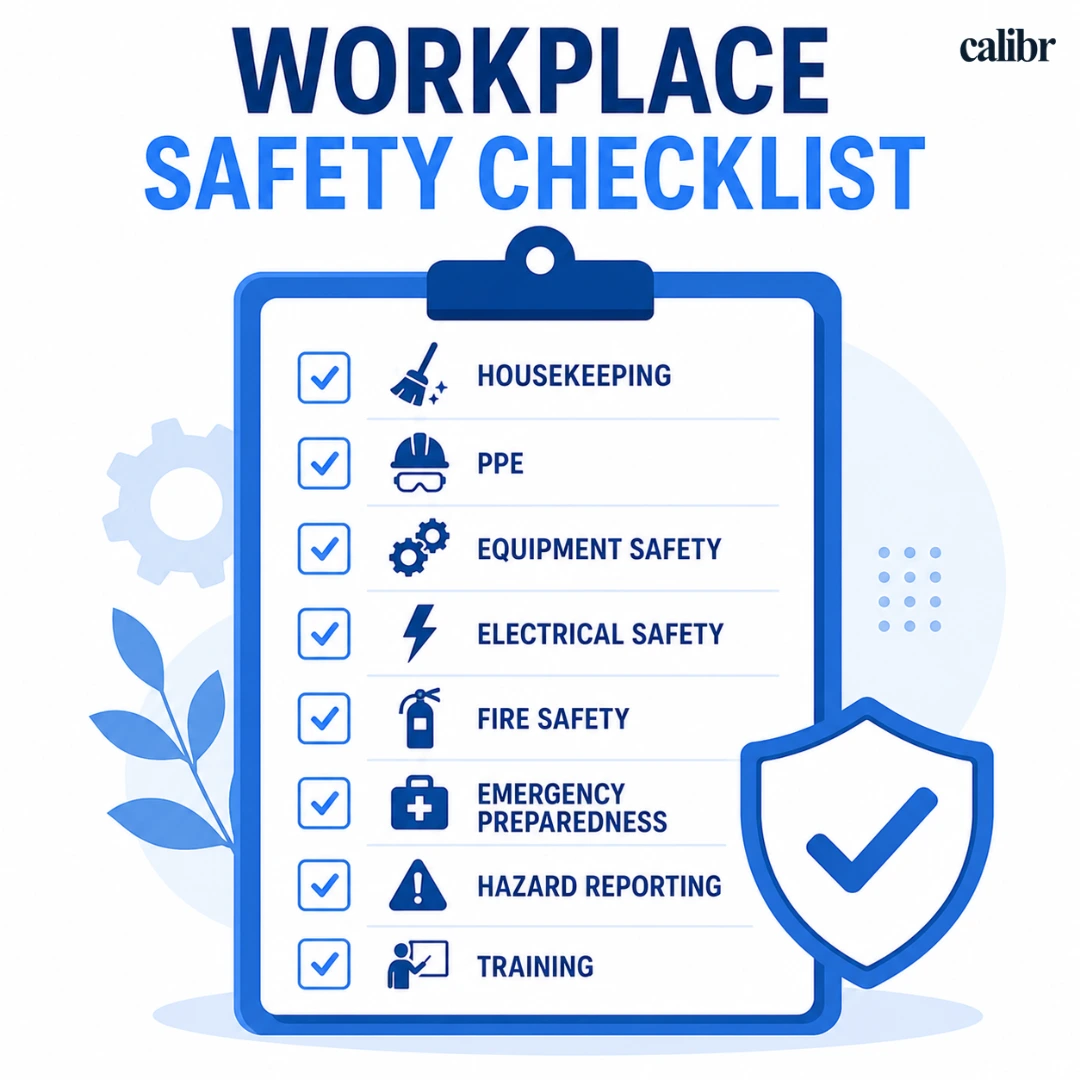
A workplace safety checklist is a structured tool used to inspect work areas, equipment, and safety practices to identify potential hazards before they lead to incidents. It provides a consistent way to assess workplace safety and ensure important safety requirements are not overlooked.
Workplace safety checklists may be used by managers, supervisors, safety teams, and employees during routine inspections, audits, or daily safety checks.
Why Is a Workplace Safety Checklist Important?
A workplace safety checklist is important because it helps organizations identify hazards, unsafe conditions, and compliance gaps before they result in workplace accidents. Rather than reacting after an incident occurs, organizations can use workplace safety checklists to proactively reduce risks and create a safer work environment.
Ignoring workplace inspections can have serious consequences. Small issues such as blocked walkways, damaged equipment, missing safety signs, or unreported hazards can quickly lead to injuries, operational disruptions, financial losses, and compliance concerns.
Over time, these issues can also affect employee confidence, productivity, and workplace morale.
Benefit | Why It Matters |
|---|---|
Identifies Hazards Early | Helps address safety risks before they result in accidents or injuries |
Supports Compliance | Encourages adherence to workplace safety policies and regulatory requirements |
Reduces Workplace Accidents | Improves hazard awareness and workplace accident prevention efforts |
Strengthens Safety Culture | Reinforces safe work practices and employee participation |
Encourages Accountability | Promotes shared responsibility for maintaining workplace safety |
By using workplace safety checklists consistently, organizations can reduce workplace risks, prevent avoidable incidents, and create a safer and more productive work environment.
How to Create a Workplace Safety Checklist
An effective workplace safety checklist should be tailored to the specific risks, equipment, and activities within your organization.
Rather than using a one-size-fits-all approach, organizations should focus on the areas that present the greatest safety concerns for their employees.
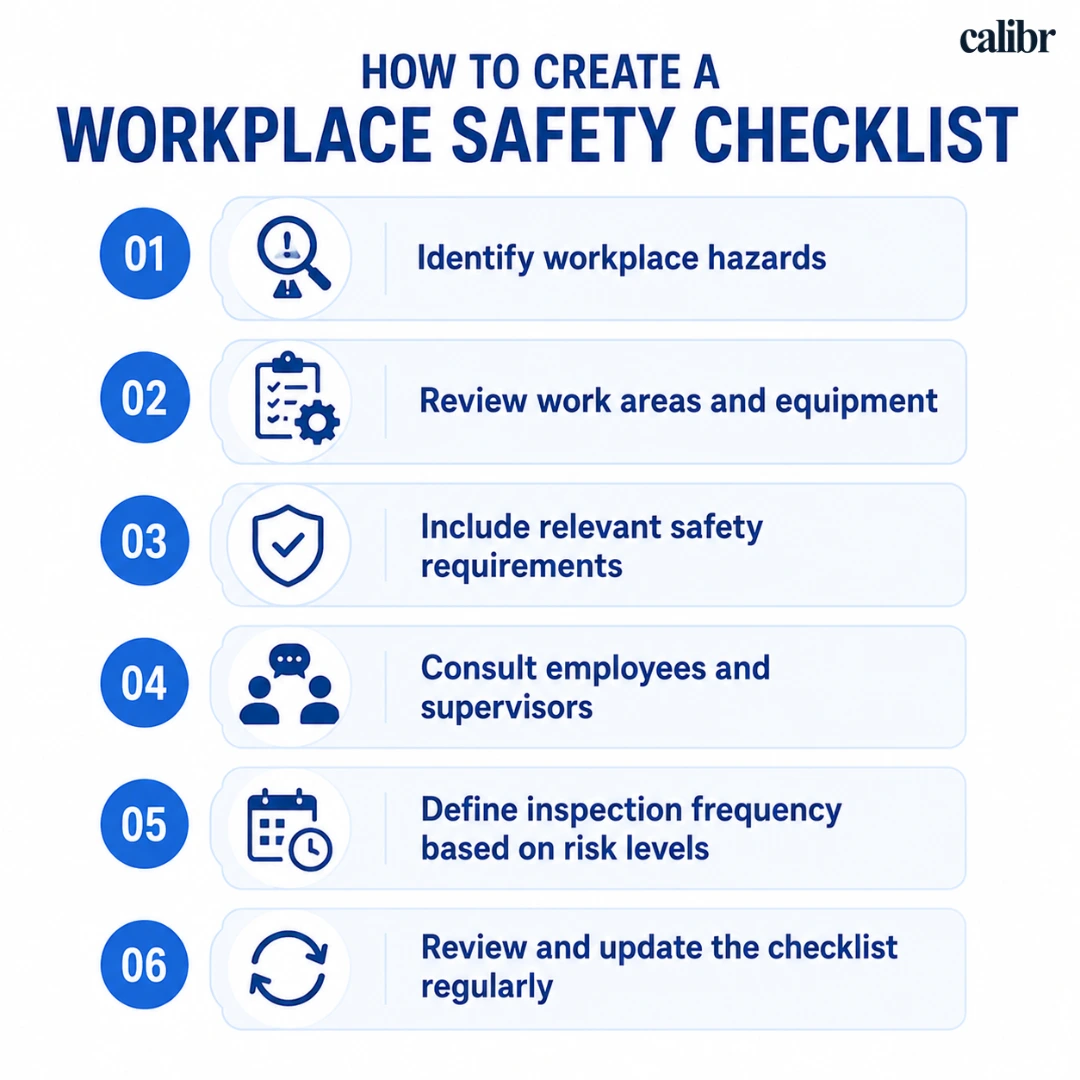
Identify workplace hazards that could result in accidents, injuries, illnesses, property damage, or operational disruptions. Focus on risks associated with daily tasks, equipment, materials, and the work environment.
Review work areas and equipment to determine what requires regular inspection. Pay particular attention to high-risk areas, frequently used equipment, and locations where incidents or near misses have previously occurred.
Include relevant safety requirements related to PPE, emergency preparedness, fire safety, housekeeping, equipment safety, electrical safety, and hazard reporting to ensure critical safety measures are consistently reviewed.
Consult employees and supervisors to understand common safety concerns, recurring workplace hazards, and day-to-day risks that may not be identified during routine inspections alone.
Define inspection frequency based on workplace activities and risk levels. High-risk work areas may require daily inspections, while lower-risk environments may only need weekly or monthly reviews.
Review and update the checklist regularly to reflect changes in equipment, processes, workplace layouts, regulatory requirements, or newly identified hazards that could affect workplace safety.
Depending on your industry, operations, and work environment, safety requirements may vary. A manufacturing facility, construction site, warehouse, healthcare organization, or office workplace will often require different inspection items and safety controls.
Use the following workplace safety checklist template as a starting point and customize it to address the specific hazards, equipment, processes, and compliance requirements relevant to your organization.
Workplace Safety Checklist Template
Every workplace has unique risks based on its industry, work environment, equipment, and operations. Organizations should customize their workplace safety checklist to address their specific hazards, compliance requirements, and safety procedures.
The following workplace safety checklist template can be used as a starting point and modified as needed.
Area | Checklist Item | Status |
|---|---|---|
Housekeeping | Walkways are clear and free from obstacles | ☐ Yes ☐ No |
Housekeeping | Floors are clean and free from slip or trip hazards | ☐ Yes ☐ No |
Housekeeping | Work areas are organized and clutter-free | ☐ Yes ☐ No |
Housekeeping | Materials are stored safely and securely | ☐ Yes ☐ No |
PPE | Employees have access to required PPE | ☐ Yes ☐ No |
PPE | PPE is being worn correctly where required | ☐ Yes ☐ No |
PPE | Damaged PPE has been replaced | ☐ Yes ☐ No |
Equipment Safety | Equipment is functioning properly | ☐ Yes ☐ No |
Equipment Safety | Equipment inspections have been completed | ☐ Yes ☐ No |
Equipment Safety | Safety guards and protective devices are in place | ☐ Yes ☐ No |
Electrical Safety | Electrical cords and equipment show no visible damage | ☐ Yes ☐ No |
Electrical Safety | Electrical panels are accessible and unobstructed | ☐ Yes ☐ No |
Electrical Safety | Temporary wiring is properly managed | ☐ Yes ☐ No |
Fire Safety | Fire extinguishers are available and inspected | ☐ Yes ☐ No |
Fire Safety | Fire exits are clearly marked and accessible | ☐ Yes ☐ No |
Fire Safety | Emergency evacuation procedures are displayed | ☐ Yes ☐ No |
Emergency Preparedness | Emergency contact information is available | ☐ Yes ☐ No |
Emergency Preparedness | First-aid kits are stocked and accessible | ☐ Yes ☐ No |
Emergency Preparedness | Employees know emergency procedures | ☐ Yes ☐ No |
Hazard Reporting | Workplace hazards are reported and documented | ☐ Yes ☐ No |
Hazard Reporting | Near misses are recorded and reviewed | ☐ Yes ☐ No |
Training | Employees have completed required safety training | ☐ Yes ☐ No |
Training | New employees received safety onboarding | ☐ Yes ☐ No |
Training | Refresher safety training is conducted regularly | ☐ Yes ☐ No |
Ergonomics | Workstations support proper posture and comfort | ☐ Yes ☐ No |
Ergonomics | Employees have reported ergonomic concerns | ☐ Yes ☐ No |
Workplace Environment | Lighting is adequate for work activities | ☐ Yes ☐ No |
Workplace Environment | Ventilation systems are functioning properly | ☐ Yes ☐ No |
Workplace Environment | Noise levels are within acceptable limits | ☐ Yes ☐ No |
Additional Checklist Items to Consider
Depending on your industry, you may also need to include:
Working at heights inspections
Forklift and vehicle safety checks
Chemical handling procedures
Lockout/tagout requirements
Machine guarding inspections
Confined space safety checks
Laboratory safety controls
Construction site safety requirements
No single workplace safety checklist can address every workplace hazard. Organizations should review and update their checklist regularly to reflect changes in workplace conditions, equipment, processes, and safety requirements.
A well-maintained checklist helps ensure inspections remain effective, supports workplace accident prevention, and contributes to a safer work environment over time.
When and How Often Should Workplace Safety Inspections Be Conducted?
A workplace safety checklist is most effective when it is used consistently rather than only after an incident occurs. Regular inspections help organizations identify hazards early, address safety concerns promptly, and maintain a safer work environment.
The frequency of inspections may vary depending on the industry, workplace risks, and operational requirements.
Inspection Type | Recommended Frequency | Purpose |
|---|---|---|
Daily Checks | High-risk work areas | Identify immediate hazards before work begins |
Weekly Inspections | Equipment, PPE, and housekeeping | Ensure workplace conditions remain safe and compliant |
Monthly Inspections | Workplace-wide safety reviews | Identify recurring issues and improvement opportunities |
Quarterly Reviews | Safety processes and compliance requirements | Evaluate overall workplace safety performance |
Annual Audits | Comprehensive safety assessment | Review workplace safety programs and long-term risks |
Organizations should also conduct workplace safety inspections:
Before introducing new equipment or machinery
After workplace accidents or near misses
Following significant process or operational changes
When new hazards are identified
During internal or external safety audits
Regular use of a workplace safety checklist helps organizations move from reactive problem-solving to proactive workplace accident prevention, reducing risks before they impact employees or operations.
Frequently Asked Questions (FAQs)
What is a workplace safety checklist?
A workplace safety checklist is a structured tool used to inspect work areas, equipment, and safety practices to identify hazards and improve workplace safety. It helps organizations ensure important safety requirements are not overlooked during inspections.
Why is a workplace safety checklist important?
A workplace safety checklist helps organizations identify risks before they lead to accidents, injuries, or operational disruptions. It also supports compliance, improves hazard awareness, and encourages a proactive approach to workplace safety.
Who should complete a workplace safety checklist?
Workplace safety checklists may be completed by managers, supervisors, safety officers, team leaders, or employees responsible for maintaining workplace safety. The specific responsibility often depends on the organization's safety processes and requirements.
When should a workplace safety checklist be used?
A workplace safety checklist should be used before shifts, during routine inspections, after workplace incidents, when new equipment is introduced, and during safety audits. Regular use helps identify and address hazards before they become serious problems.
How often should workplace safety inspections be conducted?
The frequency of workplace safety inspections depends on workplace risks and operational requirements. High-risk areas may require daily inspections, while broader workplace reviews are often conducted weekly, monthly, quarterly, or annually.
What should be included in a workplace safety checklist?
A workplace safety checklist should typically include housekeeping, equipment safety, PPE, fire safety, emergency preparedness, electrical safety, hazard reporting, training, ergonomics, and workplace environment checks.
What is the difference between a safety checklist and a safety audit?
A workplace safety checklist is used for routine inspections and hazard identification, while a safety audit is a more comprehensive review of an organization's overall safety performance, policies, and compliance practices.
Can workplace safety checklists help prevent accidents?
Yes. Workplace safety checklists help identify unsafe conditions, equipment issues, and workplace hazards before they result in incidents. Regular inspections can play an important role in workplace accident prevention efforts.
Should workplace safety checklists be customized for different industries?
Yes. Every workplace has unique risks, equipment, and compliance requirements. Organizations should customize their workplace safety checklist to address industry-specific hazards and operational needs.
How can organizations improve workplace safety compliance?
Organizations can improve workplace safety compliance by conducting regular inspections, providing safety training, encouraging hazard reporting, maintaining accurate records, and reviewing workplace safety procedures on an ongoing basis.
Final Thoughts: Creating a More Effective Workplace Safety Program
A workplace safety checklist is most effective when it is part of a broader workplace safety program. While inspections help identify hazards, long-term success depends on continuous learning, employee involvement, and leadership commitment.
Organizations can strengthen their workplace safety progran by providing regular safety training, encouraging employees to report hazards and near misses, supporting safe work practices, and continuously reviewing workplace risks.
When safety becomes a shared responsibility across all levels of the organization, businesses are better positioned to prevent accidents, improve compliance, and create a safer work environment for everyone.
Continuous learning also plays an important role in maintaining workplace safety awareness. Platforms like Calibr can help organizations reinforce safety knowledge, compliance training, and workplace best practices through personalized learning experiences that support ongoing employee development and workplace safety improvement. If you're looking to strengthen workplace learning and safety training initiatives, sign up for free or contact our team to learn how Calibr can help.
Ultimately, workplace safety is an ongoing journey rather than a one-time initiative. By combining proactive safety practices, employee involvement, and continuous learning, organizations can create safer, healthier, and more productive workplaces.


Vivetha is a digital marketing professional specializing in content marketing and SEO. She focuses on developing optimized, high-quality content that improves search visibility, supports brand objectives, and drives measurable results. With a structured and analytical approach, she ensures content aligns with business and audience needs.