
Employee recognition directly impacts engagement, retention, and productivity — not just morale.
There are 11+ distinct types of recognition, each suited to different situations and team cultures.
Peer-to-peer and real-time recognition are among the most effective yet underused methods today.
Common mistakes — like recognizing only top performers or using generic praise — actively erode trust.
The best employee recognition strategies are consistent, personalized, and embedded into daily workflows.
When Recognition Is Missing, Everyone Feels It
Picture this: a project manager spends three months leading a high-stakes product launch. Long hours, tight coordination, zero mistakes. The launch goes live. Leadership celebrates. Then... nothing. No mention of her contribution. No acknowledgment, formal or informal. Just the next assignment.
This isn't rare. It's one of the most common — and costly — things happening inside organizations right now.
What is Employee Recognition?

Employee recognition is the act of acknowledging an employee's contribution, behavior, or achievement in a way that feels meaningful. It can be as simple as a manager saying "that presentation was excellent" or as formal as an annual award ceremony.
But here's the thing: in 2026, recognition has evolved from a "nice to have" into a business-critical function.
According to Gallup research, employees who receive high quality recognition are 45% less likely to leave their organization within two years. The research consistently shows that employees who receive meaningful and strategic recognition are significantly more engaged, productive, and connected to their organization. Employees receiving recognition that satisfies multiple “recognition pillars” are up to nine times more likely to be engaged.
Consider a mid-sized SaaS company that lost three senior engineers in six months. Exit interviews revealed a shared theme: they felt invisible. Not underpaid — unseen. A manufacturing company saw absenteeism drop by 19% after implementing a structured peer recognition program. Recognition wasn't a reward for performance; it was the environment that made performance sustainable.
Why Is Employee Recognition Important?
Because work has changed. Remote and hybrid teams mean employees aren't bumping into each other in hallways. Many workers go full days — or weeks — without a single personal interaction with leadership. In that environment, recognition isn't a bonus. It's the signal that says you matter here.
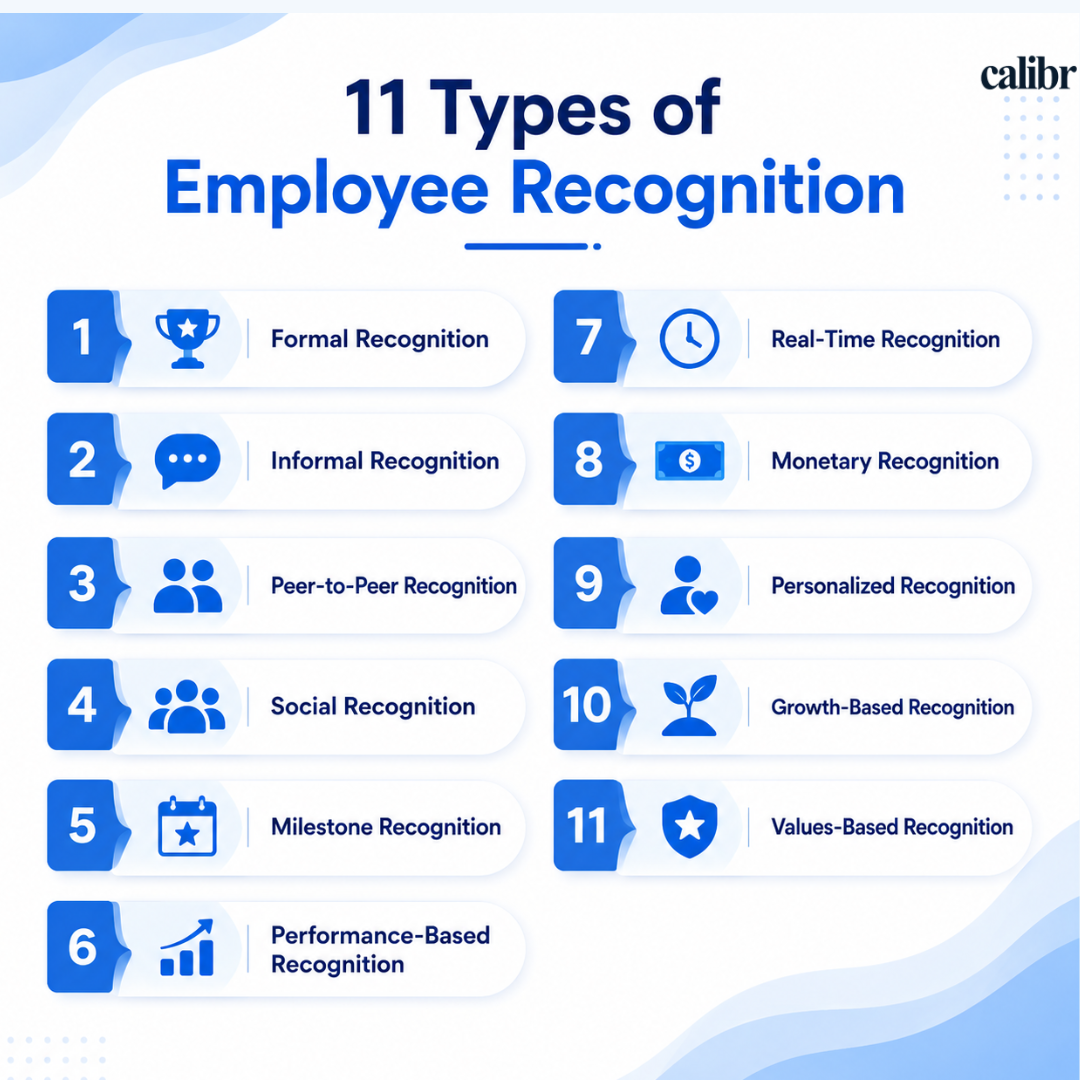
11 Types of Employee Recognition (And When Each One Works)
Recognition isn't one-size-fits-all. Different people, roles, and situations call for different approaches. Below are some of the most common employee recognition examples and when each type works best.
1. Formal Recognition
This is structured, organization-wide recognition — think "Employee of the Month" programs, annual awards, or performance reviews that formally acknowledge achievement.
Where it works best: Large organizations that need consistent, visible recognition across departments.
When to use it: To celebrate significant milestones, long-term performance, or exemplary company-value alignment.
Watch out: When formal programs run on autopilot, employees often feel they're performative. If the same people keep winning, or criteria feel opaque, formal recognition quickly loses credibility.
2. Informal Recognition
A Slack message. A quick "thank you" in a team meeting. A handwritten note. Informal recognition happens in the moment, without ceremony.
This is where most day-to-day recognition should live — and where most organizations have the biggest gap.
Where it works best: Any team, any size. Particularly powerful in remote settings where casual visibility is low.
When to use it: Constantly. Informal recognition should be the baseline, not the exception.
3. Peer-to-Peer Recognition
When recognition comes from colleagues rather than managers alone, it hits differently. Peers see effort that leaders often miss — the teammate who stayed late to help debug code, the customer support rep who de-escalated a nightmare call.
Where it works best: Teams with collaborative cultures and strong psychological safety.
When to use it: Integrate it into regular workflows — dedicated Slack channels, weekly team check-ins, or recognition platforms like Bonusly or Kudos.
Important shift: Organizations that rely solely on top-down recognition are missing most of the story. Peer recognition captures the texture of daily effort.
Research from SHRM also suggests peer recognition strengthens collaboration, belonging, and engagement in team-based work environments.
4. Social Recognition
Public acknowledgment — whether on a company intranet, a team-wide channel, or LinkedIn — amplifies recognition by making it visible. For many employees, being praised in front of peers is more meaningful than a private bonus.
Where it works best: Extroverted team cultures and customer-facing roles where visibility matters.
When to use it: For achievements that align with company values or represent behavior worth modeling across teams.
Watch out: Not everyone wants public attention. Always consider the individual. For quieter employees, social recognition can feel uncomfortable rather than motivating.
5. Milestone Recognition
Marking work anniversaries, project completions, or life events (promotions, certifications) with intentional recognition creates a sense of belonging and continuity.
Where it works best: All organizations, but especially those with long employee tenure or complex project cycles.
When to use it: On a scheduled basis — but don't let the schedule make it feel automated. A personal note alongside the milestone marker goes a long way.
6. Performance-Based Recognition
Tied directly to measurable output — hitting sales targets, exceeding KPIs, delivering ahead of schedule. This type is clear and motivating for goal-driven individuals.
Where it works best: Sales teams, operations roles, and environments with clearly defined metrics.
Watch out: If only outcomes are recognized, employees may feel their effort during a difficult quarter — where results fell short for reasons outside their control — goes unseen. Balance outcome recognition with effort recognition.
7. Real-Time Recognition
The closer recognition is to the moment of action, the more powerful it is. Real-time recognition — acknowledging something immediately when it happens — creates a direct connection between behavior and appreciation.
Where it works best: Fast-moving teams, customer service environments, and agile project teams.
Note this: Delayed recognition often loses its emotional impact. Recent workplace studies show employees respond positively to recognition delivered close to the moment of contribution rather than delayed acknowledgment weeks later
Thanking someone three weeks after an achievement feels like an afterthought. Real-time recognition requires managers to be present and paying attention.
8. Monetary Recognition
Bonuses, gift cards, salary increases, or spot awards with cash value. Money talks — but it's rarely enough on its own.
Where it works best: As a complement to meaningful recognition, not a substitute for it.
When to use it: For exceptional performance, major project delivery, or retention situations.
Watch out: Research consistently shows that monetary recognition without emotional acknowledgment can feel transactional. Employees don't just want to be paid more — they want to feel valued.
9. Personalized Recognition
This is recognition tailored to what an individual actually values — extra time off for someone managing caregiving responsibilities, a conference ticket for a learning-hungry engineer, or a handwritten note for someone who values personal connection.
Where it works best: Everywhere — but it requires managers to know their people.
Important shift: Personalization is the most underused lever in recognition. Most programs default to generic rewards because personalization takes more effort. But that effort is exactly what makes it meaningful.
10. Growth-Based Recognition
Recognizing learning, skill development, or someone stepping outside their comfort zone — regardless of immediate results. This type reinforces a growth mindset and signals that the organization values development, not just delivery.
Where it works best: Learning-focused cultures, organizations going through change, and early-career employee populations.
When to use it: When someone completes a course, takes on a stretch assignment, or demonstrates visible growth in a new skill.
11. AI-Assisted Recognition
Platforms powered by AI can now flag recognition moments — highlighting employees who haven't been acknowledged recently, suggesting recognition prompts for managers, or automating milestone messages.
Where it works best: Large organizations where managers oversee large teams and manual tracking is unrealistic.
Watch out: AI-assisted recognition should support human connection, not replace it. An automated birthday message from a bot is worse than no message at all if it's the only recognition an employee receives. Use AI to prompt humans, not to perform recognition on their behalf.
Effective recognition cultures are built through multiple layers of appreciation working together consistently.
The 3-Layer Employee Recognition Model
Most organizations treat recognition as isolated moments — an award here, a thank-you there. But sustainable recognition cultures are built through multiple layers working together consistently.
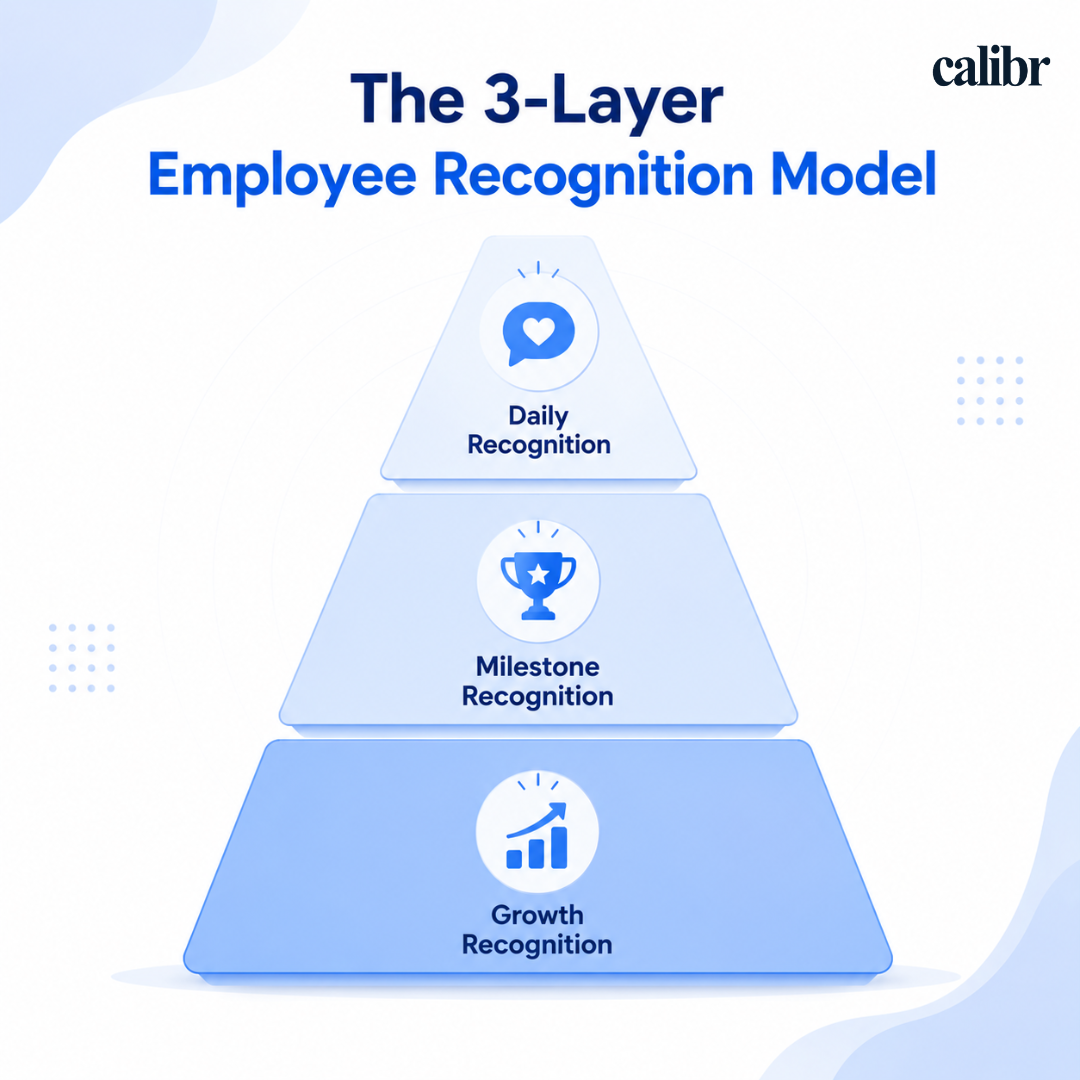
The 3-Layer Recognition Model helps organizations balance everyday appreciation, milestone visibility, and long-term employee growth.
Recognition Layer | Purpose | Examples | Best Frequency |
|---|---|---|---|
Daily Recognition | Reinforces everyday effort and contribution | Slack appreciation, verbal praise, quick thank-you notes | Daily or weekly |
Milestone Recognition | Celebrates important achievements and moments | Work anniversaries, project completions, promotions | Monthly or quarterly |
Growth Recognition | Acknowledges learning, improvement, and future potential | Skill development, stretch assignments, certifications | Ongoing throughout the year |
Why this model works
Many organizations focus heavily on milestone recognition while neglecting the daily and growth-based layers employees need most consistently.
Daily recognition creates belonging.
Milestone recognition creates visibility.
Growth recognition creates long-term commitment.
When all three layers work together, recognition becomes part of the culture rather than an occasional HR initiative.
Which Types of Employee Recognition Work Best in Different Situations
Situation | Most Effective Recognition Types | Why It Works |
|---|---|---|
Remote teams | Real-time recognition, peer-to-peer recognition, social recognition | Remote employees need intentional visibility and faster feedback loops |
Gen Z and younger Millennials | Growth-based recognition, peer recognition, frequent informal appreciation | Younger employees value authenticity, growth, and consistent feedback more than formal ceremonies |
Burnout periods | Informal recognition, personalized recognition, effort-based recognition | Employees experiencing burnout need emotional acknowledgment and human connection, not just performance pressure |
High performers | Personalized recognition, growth recognition, milestone recognition | High performers often feel their effort is expected rather than appreciated |
Hierarchical cultures | Formal recognition, manager-led recognition | Employees in structured cultures often place more value on leadership acknowledgment and organizational visibility |
Fast-moving teams | Real-time recognition, peer recognition | Immediate feedback strengthens motivation and reinforces agile collaboration |
Learning-focused organizations | Growth-based recognition, personalized recognition | Reinforces continuous learning and long-term development culture |
Why Employee Recognition Programs Often Fail
Many employee recognition programs fail because recognition becomes inconsistent, generic, or overly automated.
Recognizing only top performers creates a recognition gap where consistent contributors feel invisible.
Generic praise like “Great job” feels forgettable. Specific appreciation feels meaningful.
Delayed recognition loses emotional impact and feels like an afterthought.
Over-automated recognition can feel transactional instead of human.
Quieter employees are often overlooked despite making valuable behind-the-scenes contributions.
Rewarding visibility over real impact encourages performative work instead of meaningful work.
5 Employee Recognition Strategies for HR and L&D Leaders
1. Build recognition into workflows, not just programs
Weekly check-in templates, team retrospectives, and manager training should all have recognition built in — not bolted on.
2. Train managers first
The biggest driver of recognition culture is middle management. Invest in helping managers recognize specifically, frequently, and authentically.
3. Make it measurable
Track recognition frequency, distribution across teams and demographics, and correlation with engagement and retention metrics. What gets measured gets managed.
4. Personalize at scale
Use surveys or 1:1 conversations to understand how each employee prefers to be recognized. Update this over time — preferences change.
5. Let leadership model it visibly
When senior leaders recognize employees publicly and specifically, it signals that recognition is organizational, not just an HR initiative.
Frequently Asked Questions (FAQs)
What is employee recognition?
Employee recognition is the practice of acknowledging and appreciating an employee’s contributions, achievements, or positive behaviors in a meaningful way. It can be formal or informal and helps improve engagement, motivation, retention, and workplace culture by making employees feel valued and connected to their work.
What type of employee recognition is most effective?
The most effective employee recognition is timely, specific, and personalized. Peer-to-peer recognition, real-time appreciation, and growth-based recognition are particularly effective in modern workplaces because they create continuous engagement rather than occasional acknowledgment.
How do managers recognize employees effectively?
Managers recognize employees effectively by giving timely feedback, acknowledging specific contributions, personalizing recognition based on employee preferences, and consistently reinforcing positive behaviors and growth.
Why is recognition important in remote teams?
Recognition is especially important in remote teams because employees have fewer moments of natural visibility and connection. Consistent recognition helps remote employees feel valued, included, and connected to the organization.
What are the three levels of employee recognition?
The three levels of employee recognition are daily recognition, milestone recognition, and growth recognition. Together, these layers help organizations create a balanced recognition culture that supports engagement, visibility, and long-term employee development.
Final Thoughts: Recognition Is a Business Strategy
The organizations that will win on culture in the coming years won't just have better perks or bigger budgets. They'll have leaders who make employees feel genuinely seen.
In a workplace shaped by hybrid work, AI-driven work patterns, and rising digital overload — themes highlighted in the Microsoft Work Trend Index — human connection is becoming the competitive advantage.
The most effective types of employee recognition help organizations create that connection consistently across teams, roles, and work environments.
Done right, employee recognition isn't an HR checkbox. It's the signal — repeated day after day — that the work people do matters, that the people doing it matter, and that the organization they're part of is worth staying in.
That signal compounds over time. It's how strong workplace cultures are built.


Vivetha is a digital marketing professional specializing in content marketing and SEO. She focuses on developing optimized, high-quality content that improves search visibility, supports brand objectives, and drives measurable results. With a structured and analytical approach, she ensures content aligns with business and audience needs.