
HR Metrics are measurable data points used to evaluate the effectiveness of human resource activities such as hiring, retention, engagement, productivity, and workforce planning.
They help HR teams and business leaders track performance, identify trends, and make data-driven decisions.
Common types of HR metrics include employee turnover rate, retention rate, time to hire, cost per hire, and absenteeism rate.
Organizations generate vast amounts of workforce data every day, but data alone does not drive better decisions.
According to Gallup's State of the Global Workplace 2026 Report, low employee engagement costs the global economy approximately $10 trillion in lost productivity, equivalent to 9% of global GDP. Additionally, SHRM research indicates that replacing an employee can cost organizations 50% to 200% of an employee's annual salary.
These workforce challenges highlight why HR metrics have become essential for measuring workforce performance, improving retention, optimizing hiring, and making data-driven business decisions.
What Are HR Metrics?
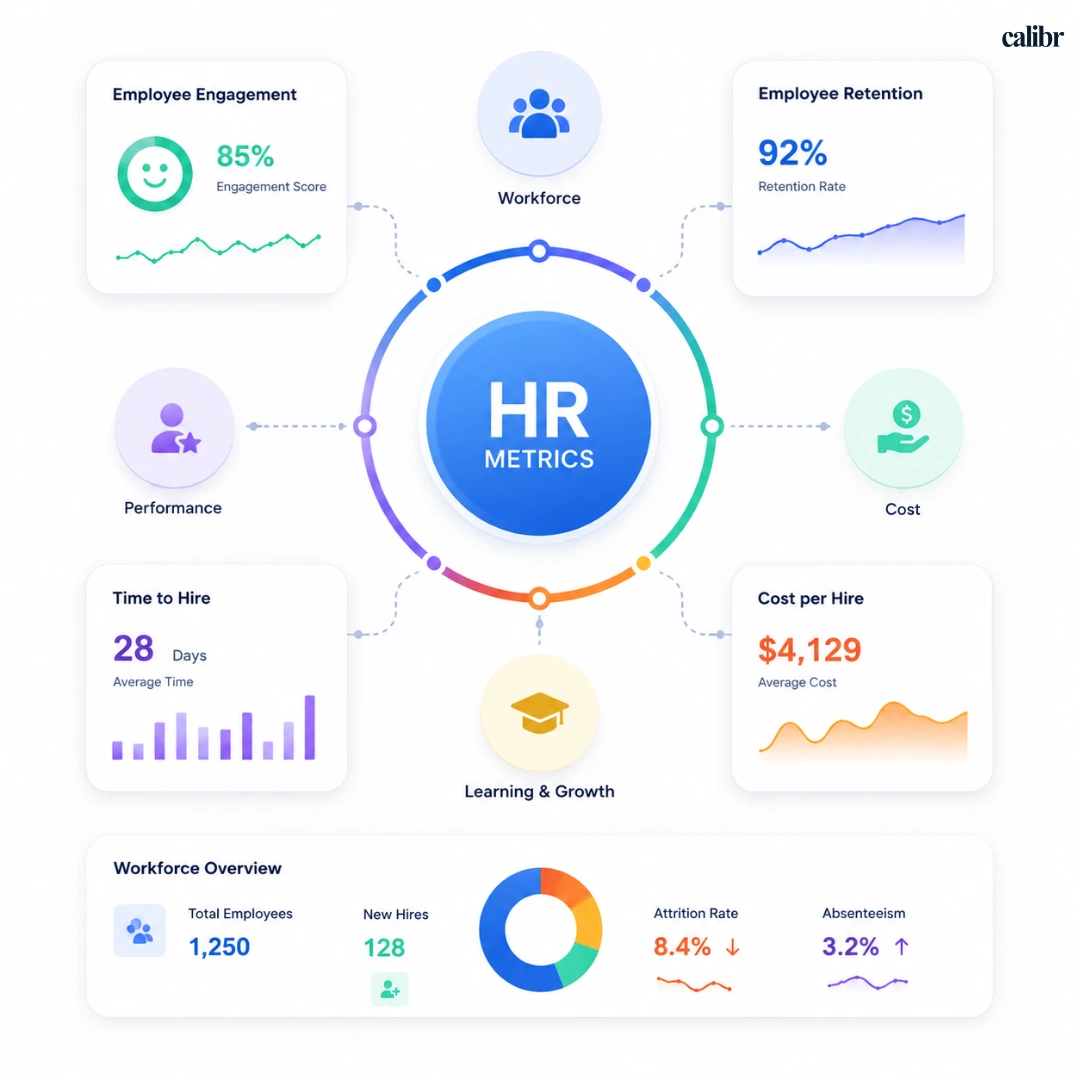
HR Metrics are quantitative measurements that help organizations assess workforce performance and the effectiveness of HR processes. In simple terms, they provide insights into how well an organization's people strategies are working.
For example, if a company notices a rising employee turnover rate, HR metrics can help identify whether the issue is related to compensation, employee engagement, leadership, or career development opportunities. Similarly, recruitment metrics can reveal whether the hiring process is efficient or needs improvement.
Many organizations refer to these measurements as human resource metrics because they focus on employee-related activities and outcomes. By tracking HR metrics regularly, organizations can move beyond assumptions and make decisions based on real workforce data. These metrics are often summarized and communicated through HR Reports that help leaders monitor workforce trends and business performance.
Today, HR metrics play a critical role in workforce planning, talent management, employee retention, and organizational growth. Whether a company has 50 employees or 50,000, measuring workforce performance helps leaders understand what is working and where improvements are needed.
Why Are HR Metrics Important?
HR metrics provide valuable insights that support better business decisions.
First, they help improve workforce planning by identifying trends in hiring, retention, and employee movement. This enables organizations to anticipate staffing needs and avoid talent shortages.
Second, HR metrics support recruitment effectiveness. Metrics such as Time to Hire and Cost per Hire help recruiters evaluate hiring efficiency and optimize recruitment processes.
Third, they help improve employee retention. By monitoring turnover, engagement, and absenteeism, organizations can identify potential issues before they lead to higher employee attrition.
Finally, HR metrics enable data driven decision-making. Rather than relying on assumptions, HR leaders can use measurable workforce data to support strategic initiatives and business goals.
HR Metrics in Action: Real World Example
Company: Google
Google uses people analytics and HR metrics to make data-driven workforce decisions. Through its People Operations team, the company analyzes employee data to improve hiring, employee experience, performance, and talent management. This approach helps Google make informed decisions and continuously enhance its workplace practices. [Source: Google – People Analytics]
10 Essential Types of HR Metrics Every Organization Should Track
Understanding common HR metric examples helps organizations measure workforce performance, evaluate HR effectiveness, and identify areas for improvement.
These metrics provide valuable insights into recruitment, retention, employee engagement, productivity, and overall workforce health.
The following HR metrics examples are among the most important indicators every organization should track regularly.
HR Metric | What It Measures | Why It Matters | What a High/Low Value Indicates |
|---|---|---|---|
Employee Turnover Rate | Percentage of employees who leave the organization during a specific period. | Helps identify retention issues and workforce stability. | High: Potential dissatisfaction, poor culture, or leadership issues. Low: Better employee retention and stability. |
Employee Retention Rate | Percentage of employees who remain with the company over a given period. | Measures the organization's ability to retain talent. | High: Strong employee satisfaction and loyalty. Low: Risk of losing valuable talent and higher replacement costs. |
Time to Hire | Average number of days required to fill an open position. | Indicates recruitment efficiency and hiring process effectiveness. | Low: Faster hiring and reduced productivity gaps. High: Delays in filling critical roles and increased hiring costs. |
Cost per Hire | Total recruitment expenses divided by the number of hires made. | Helps evaluate recruitment spending and budget efficiency. | Low: Cost-effective hiring process. High: Recruitment channels or processes may need optimization. |
Absenteeism Rate | Percentage of workdays missed due to employee absence. | Reflects workforce well-being, engagement, and attendance patterns. | High: Possible burnout, disengagement, or workplace issues. Low: Healthy and committed workforce. |
Offer Acceptance Rate | Percentage of job offers accepted by candidates. | Measures employer attractiveness and competitiveness. | High: Strong employer brand and attractive compensation. Low: Candidates may prefer competitors or reject offers due to compensation concerns. |
Employee Engagement Score | Measures employee satisfaction, motivation, and commitment. | Highly engaged employees are generally more productive and loyal. | High: Better performance, innovation, and retention. Low: Increased turnover risk and reduced productivity. |
Headcount | Total number of employees currently working in the organization. | Provides a snapshot of workforce size and growth. | Helps HR plan staffing needs, budgeting, and organizational growth strategies. |
Training Completion Rate | Percentage of employees who complete assigned training programs. | Measures participation in learning and development initiatives. | High: Strong learning culture and compliance. Low: Training effectiveness or participation issues may exist. |
Internal Promotion Rate | Percentage of open positions filled by existing employees. | Indicates career growth opportunities and succession planning effectiveness. | High: Strong talent development and employee growth. Low: Potential lack of internal career advancement opportunities. |
Why These HR Metrics Matter
Improve employee retention and reduce turnover costs by identifying factors that cause employees to leave and implementing targeted retention strategies.
Optimize recruitment efficiency and hiring quality by tracking hiring speed, costs, and candidate acceptance rates to improve recruitment outcomes.
Increase employee engagement and productivity by measuring workforce satisfaction, motivation, and overall performance levels.
Support workforce planning and business growth by providing insights into staffing needs, workforce trends, and future talent requirements.
Measure the effectiveness of HR initiatives by evaluating the impact of training programs, engagement efforts, and talent development strategies.
Enable data-driven decision-making by providing accurate workforce data that helps leaders make informed strategic and operational decisions. Many organizations track these metrics through an HR Dashboard that provides real-time visibility into workforce performance.
HR Metrics vs HR KPIs
Although the terms are often used interchangeably, HR metrics and HR KPIs serve different purposes within workforce management and performance measurement.
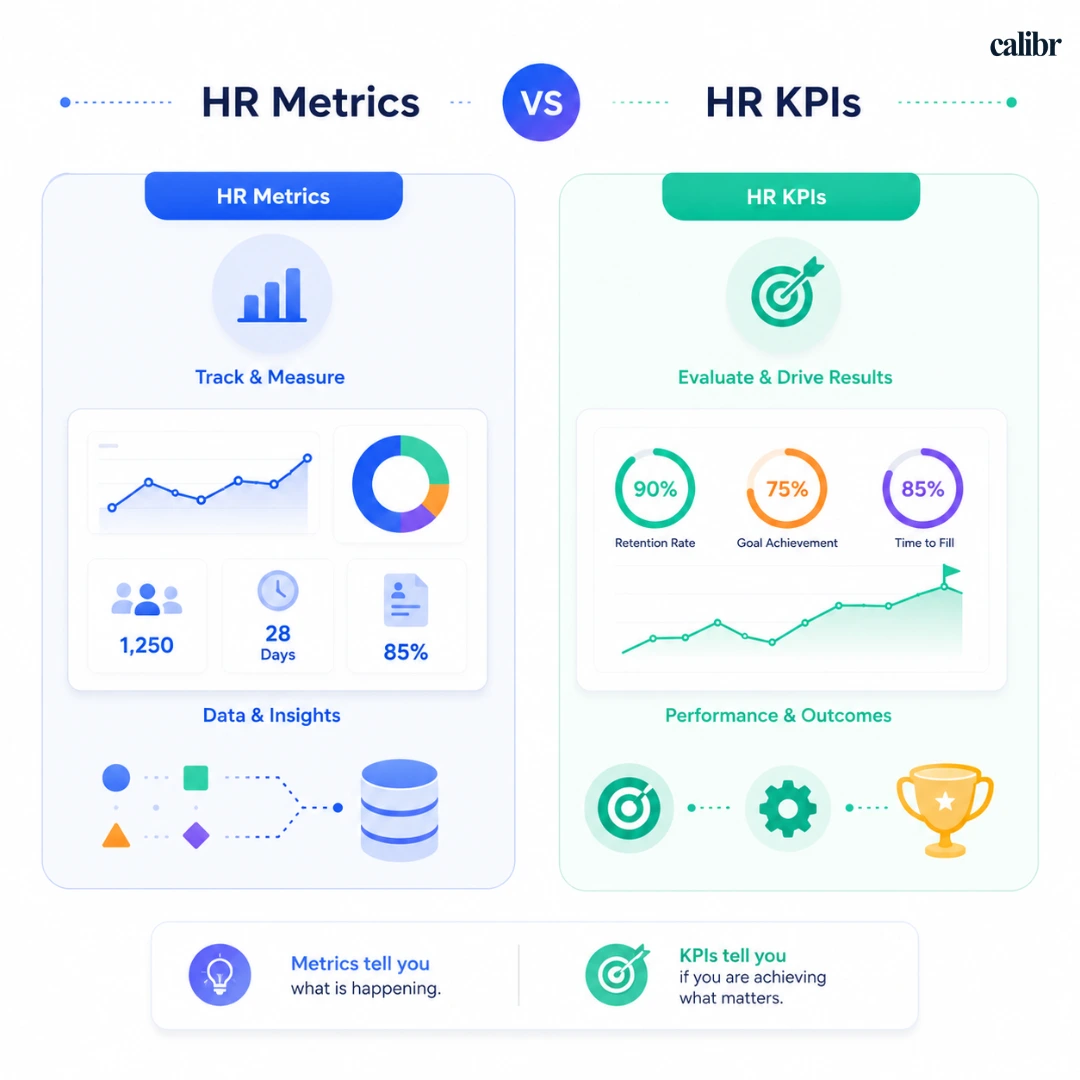
HR Metrics are measurements used to track and monitor workforce activities. They provide operational insights into areas such as recruitment, employee retention, engagement, attendance, and productivity. Their primary purpose is to help organizations understand what is happening within the workforce.
HR KPIs (Key Performance Indicators), on the other hand, are strategic measurements tied to specific business goals. They help organizations evaluate whether HR initiatives are achieving desired outcomes and contributing to overall business objectives.
Key Differences
HR Metrics measure workforce activities, while HR KPIs measure progress toward strategic goals.
HR Metrics provide operational insights, whereas HR KPIs focus on business outcomes.
HR Metrics are primarily used for monitoring performance, while HR KPIs are used to evaluate success against predefined targets.
HR Metrics help identify trends and patterns, whereas HR KPIs help determine whether organizational objectives are being achieved.
Example
Consider Employee Turnover Rate. Tracking the percentage of employees who leave the organization is an HR metric because it measures workforce activity. However, if a company sets a goal to reduce turnover by 10% within a year, that target becomes an HR KPI because it is linked to a specific business objective and desired outcome.
Common Mistakes Organizations Make When Tracking HR Metrics
Many organizations collect workforce metrics and employee data but fail to use them effectively to improve decision-making and workforce performance.
Mistake | Best Practice |
Tracking too many metrics | Focus on business priorities |
Using outdated reports | Review metrics regularly |
Measuring without action | Create improvement plans |
Looking at metrics in isolation | Analyze related metrics together |
The goal of tracking workforce metrics is not simply to generate reports but to improve workforce outcomes. Organizations should focus on metrics that align with business objectives and use the insights to drive meaningful improvements.
Key Takeaways
HR metrics are measurable indicators that evaluate workforce and HR performance.
Common types of HR metrics include turnover, retention, hiring, engagement, and attendance metrics.
Human resource metrics help organizations make informed workforce decisions.
HR KPIs are goal-oriented metrics linked to strategic business objectives.
Tracking the right HR metrics helps improve workforce planning, productivity, and employee retention.
Frequently Asked Questions (FAQs)
What are HR metrics?
HR metrics are measurable indicators used to evaluate workforce performance, recruitment effectiveness, employee retention, engagement, and other HR activities.
What are the most important HR metrics?
Some of the most important HR metrics include employee turnover rate, retention rate, time to hire, cost per hire, absenteeism rate, and employee engagement score.
What is the difference between HR metrics and HR KPIs?
HR metrics measure workforce activities and performance, while HR KPIs track progress toward specific strategic business goals.
Why are HR metrics important?
HR metrics help organizations improve hiring, retention, workforce planning, employee engagement, and overall business performance through data-driven decision-making.
How often should organizations track HR metrics?
Organizations should monitor HR metrics regularly, typically on a monthly, quarterly, or annual basis depending on the metric. Regular tracking helps identify workforce trends, measure HR performance, and support timely decision-making.
What are workforce metrics?
Workforce metrics are measurable indicators that assess workforce health, productivity, and performance. Examples include employee turnover rate, retention rate, absenteeism rate, employee engagement score, and training completion rate. These metrics help organizations make informed workforce and talent management decisions.
Final Thoughts
HR metrics are more than just numbers—they provide actionable insights that help organizations attract, retain, and develop top talent.
By tracking the right workforce metrics, businesses can identify challenges early, improve employee experiences, optimize HR processes, and align people strategies with organizational goals.
As workplaces become increasingly data-driven, effective use of HR metrics is essential for building a productive, engaged, and future-ready workforce.


Vivetha is a digital marketing professional specializing in content marketing and SEO. She focuses on developing optimized, high-quality content that improves search visibility, supports brand objectives, and drives measurable results. With a structured and analytical approach, she ensures content aligns with business and audience needs.