These workplace safety tips help employees prevent accidents, reduce risks, and create a safer, more productive work environment.
Employees can reduce risks by following safety procedures, wearing PPE, reporting hazards, and using equipment correctly.
Common workplace hazards include physical, ergonomic, electrical, and environmental risks that can lead to accidents and health issues.
Regular safety training, hazard awareness, proper lifting techniques, and emergency preparedness strengthen workplace safety culture.
Early warning signs such as near misses, poor housekeeping, employee fatigue, and recurring incidents should be addressed proactively.
A simple 60-second safety self-check before work can help employees identify risks, stay alert, and contribute to a safer workplace.
Quick Answer: Workplace Safety Tips
The most important workplace safety tips include following safety procedures, wearing appropriate personal protective equipment (PPE), reporting hazards promptly, maintaining clean work areas, and staying alert to potential risks. Together, these practices help reduce workplace accidents, support employee well-being, and contribute to a safer work environment.
The following workplace safety tips for employees can help strengthen safety awareness, reduce workplace risks, and support workplace accident prevention across a wide range of industries.
What Is Workplace Safety?
Workplace safety refers to the policies, practices, and precautions that help protect employees from injuries, illnesses, and hazards while performing their jobs. It involves identifying potential risks, implementing preventive measures, and creating a work environment where people can carry out their responsibilities safely and confidently.
While workplace safety is often associated with regulations, training, and protective equipment, its purpose goes beyond compliance. At its core, workplace safety is about ensuring that employees return home safely at the end of each workday.
Why Is Workplace Safety Important?
A single overlooked hazard can have a significant impact. For example, a wet floor that goes unreported may seem minor, but it can quickly lead to an injury, lost work hours, and disruptions to daily operations. Small safety issues often become larger problems when they are ignored.
This is why workplace safety for employees should be a priority in every organization. Effective workplace safety practices help:
Prevent workplace accidents and injuries
Protect employee health and well-being
Reduce absenteeism and operational disruptions
Improve productivity and focus
Build trust and confidence among employees
Create a stronger workplace safety culture
According to OSHA, effective workplace safety programs rely on hazard identification, employee involvement, and continuous improvement to help reduce workplace risks.
Organizations that prioritize workplace safety understand that it is not solely the responsibility of managers or safety teams. Creating a safe workplace requires active participation from everyone.
When employees are encouraged to identify risks, report hazards, and follow safe work practices, workplace safety becomes a shared responsibility rather than a compliance requirement.
The importance of workplace safety is reflected not only in day-to-day operations but also in global workforce data. The following statistics highlight the real-world impact of workplace injuries, illnesses, and safety initiatives.
Workplace Safety By The Numbers
According to the ILO, approximately 2.93 million workers die each year due to work related accidents and diseases worldwide and it estimates that 395 million workers experience non-fatal work injuries annually.
According to the NSC, workplace injuries cost employers over 170 billions annually through medical expenses, lost productivity, and administrative costs.
15 Essential Workplace Safety Tips for Employees
Workplace safety is built through consistent daily habits. While organizations provide policies, training, and resources, employees also play an important role in identifying risks and preventing accidents.
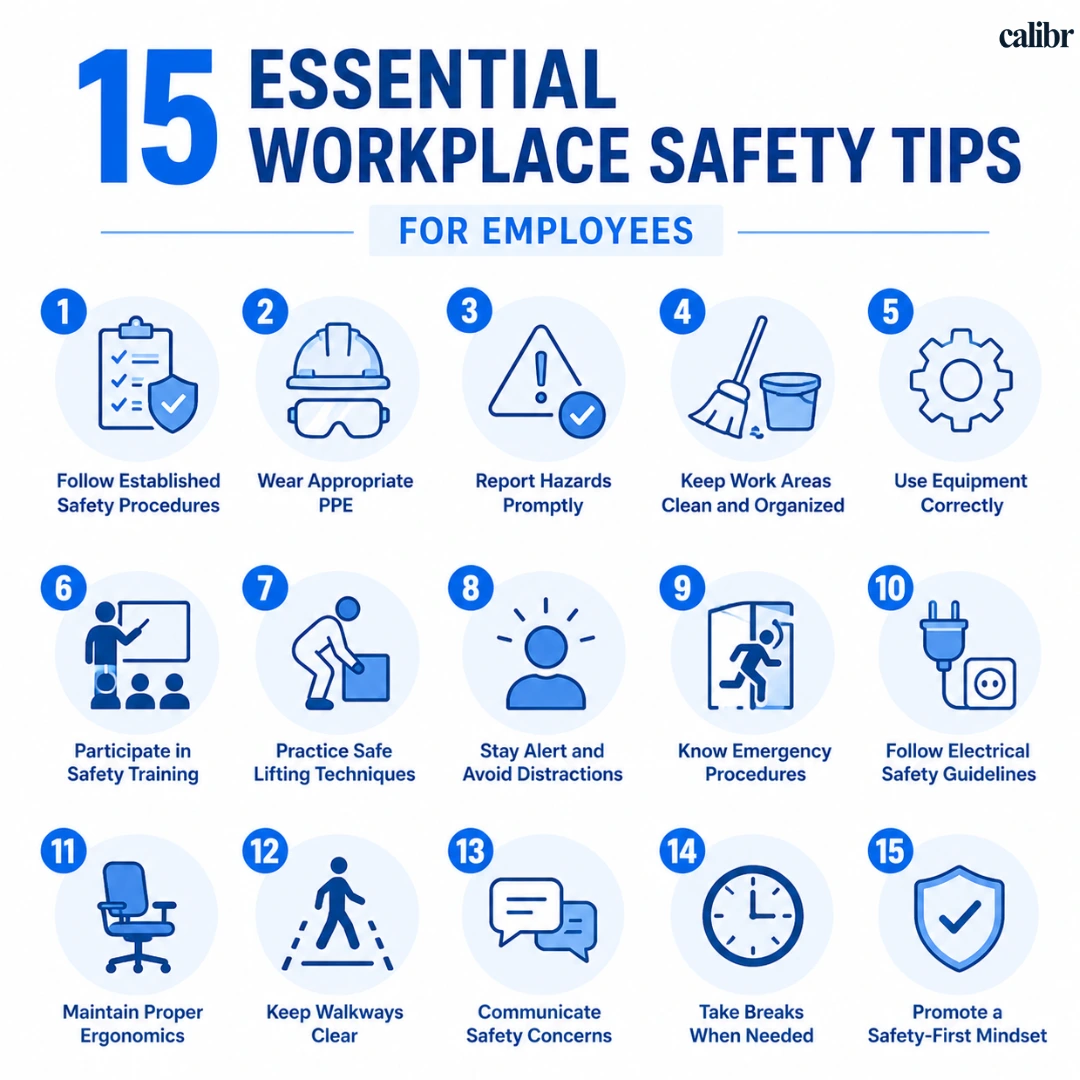
The following workplace safety tips for employees can help in reducing workplace hazards, improve safety awareness, and contribute to a safer work environment.
1. Follow Established Safety Procedures
Safety procedures are designed to help employees perform tasks safely, reduce workplace risks, and maintain consistent standards across the organization. While shortcuts may appear efficient, they can increase the likelihood of accidents and injuries.
Key practices include:
Review and follow workplace safety guidelines regularly.
Complete tasks according to approved processes.
Avoid bypassing safety controls or safeguards.
Seek clarification when procedures are unclear.
Report outdated or ineffective safety procedures.
2. Wear Appropriate Personal Protective Equipment (PPE)
Personal protective equipment helps protect employees from workplace hazards that cannot be eliminated through other controls. The type of PPE required will vary depending on the work environment and job responsibilities.
Key practices include:
Wear the required PPE for every task.
Inspect protective equipment before use.
Replace damaged or worn-out PPE promptly.
Ensure PPE fits properly and comfortably.
Follow organizational PPE requirements at all times.
3. Report Hazards Promptly
Hazards that go unnoticed or unreported can quickly lead to incidents. Employees play an important role in identifying potential risks and helping organizations address them before accidents occur.
Key practices include:
Report unsafe conditions immediately.
Highlight damaged equipment or tools.
Notify supervisors about blocked walkways.
Report spills, leaks, or exposed wiring.
Encourage colleagues to report hazards as well.
4. Keep Work Areas Clean and Organized
A clean workplace not only improves efficiency but also reduces common safety risks. Good housekeeping is one of the simplest workplace safety measures employees can practice daily.
Key practices include:
Keep walkways clear and unobstructed.
Store tools and materials properly after use.
Clean spills as soon as possible.
Dispose of waste in designated areas.
Maintain an organized workstation throughout the day.
5. Use Equipment Correctly
Improper equipment use is a common cause of workplace accidents. Employees should understand how equipment functions and follow recommended operating procedures.
Key practices include:
Use equipment only for its intended purpose.
Follow operating instructions carefully.
Perform pre-use safety checks when required.
Report equipment malfunctions immediately.
Never use equipment without proper authorization or training.
6. Participate in Safety Training
Safety training helps employees understand workplace hazards, safe work practices, and emergency procedures. Regular workplace safety training ensures that safety knowledge remains current and relevant as workplace conditions evolve.
The International Labour Organization (ILO) highlights ongoing safety training as an important part of workplace accident prevention and strengthening safety awareness.
Key practices include:
Attend all required safety training sessions.
Stay informed about updated workplace safety policies.
Ask questions when safety procedures are unclear.
Apply training lessons during day-to-day tasks.
Share safety knowledge with colleagues when appropriate.
7. Practice Safe Lifting Techniques
Improper lifting can lead to strains, sprains, and other musculoskeletal injuries. Using correct lifting techniques helps protect employees and reduces the risk of long-term physical discomfort.
Key practices include:
Assess the weight of an object before lifting.
Bend at the knees instead of the waist.
Keep the load close to your body.
Avoid twisting while carrying heavy items.
Use lifting aids or seek assistance when needed.
8. Stay Alert and Avoid Distractions
Even experienced employees can overlook hazards when distracted or fatigued. Staying focused helps individuals identify risks, make better decisions, and maintain workplace safety throughout the day.
Key practices include:
Remain attentive while performing tasks.
Limit distractions in high-risk work areas.
Avoid using mobile devices when safety could be affected.
Take regular breaks to maintain focus.
Report fatigue-related concerns when necessary.
9. Know Emergency Procedures
Emergencies can occur unexpectedly, making preparedness essential. Employees who understand emergency procedures are better equipped to respond quickly and minimize potential harm.
Key practices include:
Learn evacuation routes and assembly points.
Know how to report emergencies.
Familiarize yourself with emergency contact information.
Understand the location of safety equipment.
Participate actively in emergency drills.
10. Follow Electrical Safety Guidelines
Electrical hazards can result in serious injuries, equipment damage, and workplace disruptions. Following electrical safety practices helps reduce risks and supports a safer work environment.
Key practices include:
Inspect cords and equipment for visible damage.
Avoid overloading electrical outlets.
Keep electrical equipment away from water.
Report exposed wires or faulty connections immediately.
Use only approved and properly maintained equipment.
11. Maintain Proper Ergonomics
Poor workstation setup and repetitive movements can contribute to discomfort, fatigue, and long-term musculoskeletal issues. Paying attention to ergonomics helps employees work more comfortably and efficiently.
Key practices include:
Adjust chairs, desks, and monitors to support proper posture.
Keep frequently used items within easy reach.
Position screens at eye level to reduce neck strain.
Take short stretching breaks throughout the day.
Report ergonomic concerns before they become health issues.
12. Keep Walkways Clear
Blocked pathways can increase the risk of slips, trips, and falls, which remain among the most common workplace accidents. Maintaining clear walkways helps employees move safely throughout the workplace.
Key practices include:
Remove unnecessary items from walkways.
Store materials in designated locations.
Secure loose cables and cords.
Clean spills immediately when identified.
Ensure emergency exits remain accessible at all times.
13. Communicate Safety Concerns
Effective safety programs rely on open communication. Employees should feel comfortable raising concerns, reporting risks, and suggesting improvements that could strengthen workplace safety.
The National Safety Council (NSC) encourages proactive hazard reporting, as addressing concerns early can help prevent incidents before they occur.
Key practices include:
Report unsafe conditions as soon as they are identified.
Share observations during safety meetings.
Encourage colleagues to speak up about risks.
Escalate unresolved safety concerns when necessary.
Support a culture of continuous safety improvement.
14. Take Breaks When Needed
Fatigue can affect concentration, reaction time, and decision-making. Taking appropriate breaks helps employees maintain focus and reduces the likelihood of mistakes that could lead to incidents.
Key practices include:
Take scheduled breaks throughout the workday.
Step away from repetitive tasks when possible.
Stay hydrated and maintain healthy work habits.
Recognize signs of fatigue and mental exhaustion.
Use break periods to reset and refocus.
15. Promote a Safety-First Mindset
Creating a safer workplace requires more than policies and procedures. A strong safety culture develops when employees actively consider safety in their daily decisions and actions. Strong workplace safety for employees begins with a shared commitment to preventing risks before they result in incidents.
Key practices include:
Prioritize safety alongside productivity goals.
Lead by example through safe work practices.
Encourage proactive risk identification.
Recognize and reinforce positive safety behaviors.
Treat workplace safety as a shared responsibility.
Common Types of Workplace Hazards and Their Impact
Even in organizations with established safety procedures, workplace hazards can still exist.
Some risks are immediately visible, while others develop gradually and may go unnoticed until they affect employee well-being or productivity.
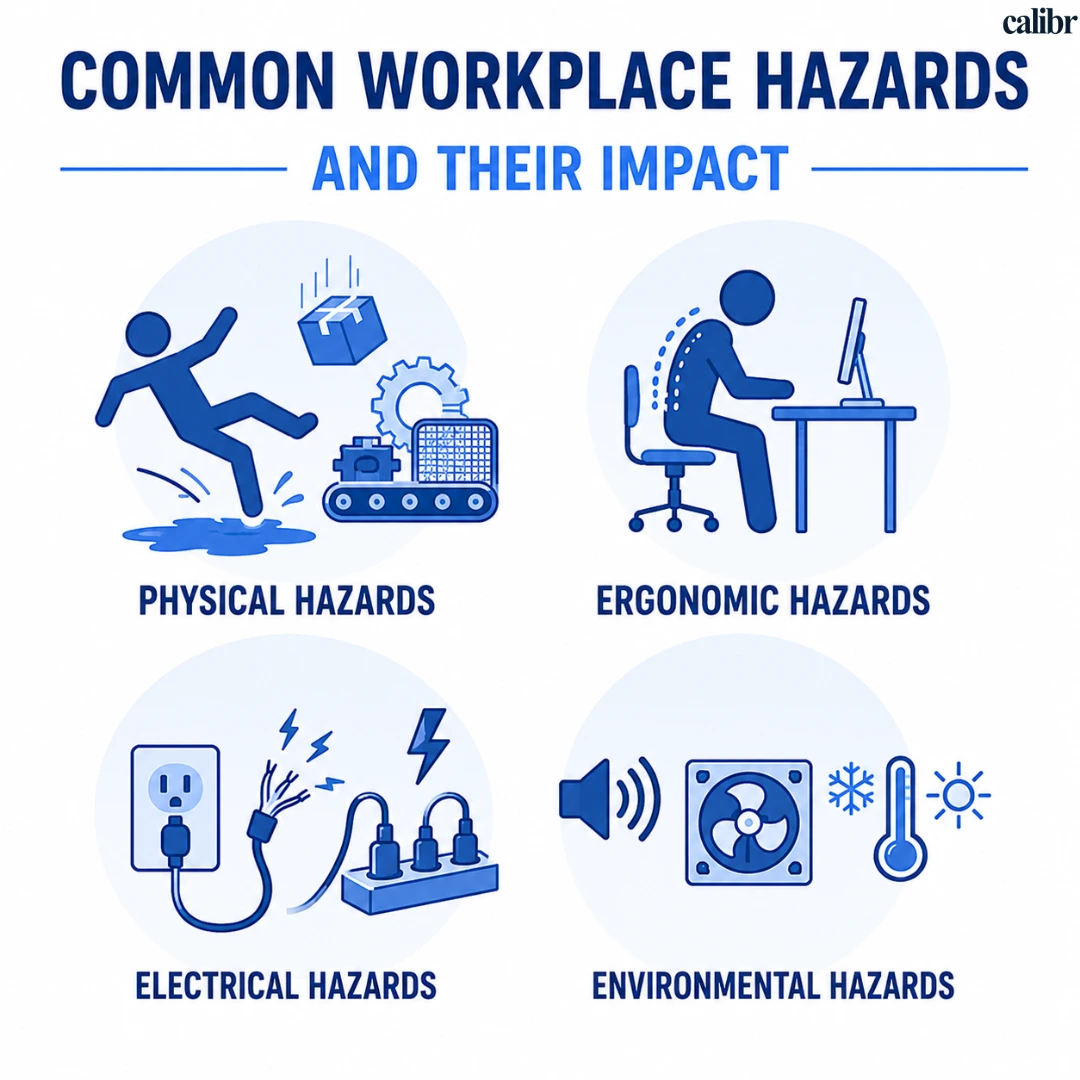
Understanding these types of workplace hazards can help employees recognize potential dangers early and take appropriate action to prevent incidents.
Hazard Type | Common Examples | Potential Impact |
|---|---|---|
Physical Hazards | Slippery floors, falling objects, unguarded machinery | Injuries, accidents, and lost work time |
Ergonomic Hazards | Poor posture, repetitive movements, improper lifting | Strains, sprains, and musculoskeletal disorders |
Electrical Hazards | Damaged wiring, exposed cables, overloaded outlets | Electric shocks, burns, and fire risks |
Environmental Hazards | Excessive noise, poor ventilation, extreme temperatures | Health concerns, fatigue, and reduced concentration |
By understanding these hazards and following workplace safety measures, employees can help reduce risks, prevent accidents, and contribute to a safer work environment.
How to Recognize Workplace Safety Risks Before They Lead to Accidents
Workplace accidents rarely happen without warning. In many cases, small issues and unsafe behaviors appear long before an incident occurs. Identifying these warning signs early can help organizations address concerns proactively and strengthen workplace safety efforts before risks escalate.
Warning Sign | What It Could Indicate |
|---|---|
Frequent near-miss incidents | Existing hazards that could lead to future accidents |
Employees taking shortcuts | Safety procedures are not being followed consistently |
Poor housekeeping standards | Increased risk of slips, trips, and falls |
Delayed hazard reporting | Safety concerns are not being addressed promptly |
Recurring equipment issues | Potential maintenance or operational risks |
Signs of employee fatigue | Reduced focus, judgment, and reaction time |
Low participation in safety initiatives | Limited engagement in workplace safety practices |
Repeated occurrence of similar incidents | Root causes have not been fully addressed |
Paying attention to these indicators can help organizations identify workplace risks early, improve safety awareness, and create a stronger safety culture.
The 60-Second Workplace Safety Checklist
Before starting work, employees can take one minute to assess their readiness, surroundings, and equipment.
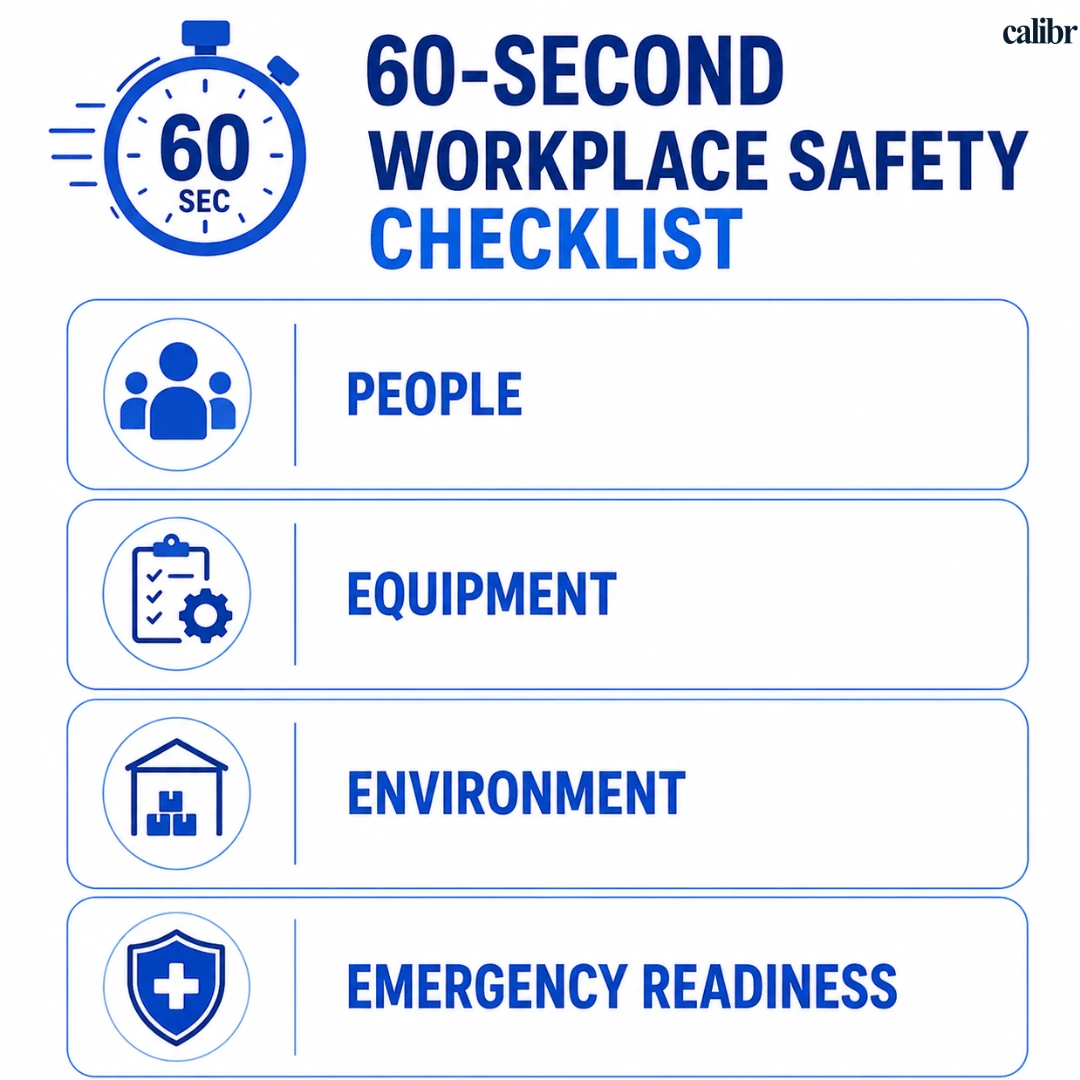
People
Am I physically and mentally prepared for today's tasks?
Do I understand the work I need to complete?
Equipment
Is my equipment functioning properly?
Am I wearing the required PPE?
Environment
Are walkways and work areas clear?
Have I noticed any potential hazards that need attention?
Emergency Readiness
Do I know the nearest emergency exit?
Am I familiar with emergency procedures and contacts?
Taking just 60 seconds to complete this workplace safety checklist can help employees stay alert, identify risks early, and contribute to a safer and more productive work environment. Employees looking to test their workplace safety knowledge can also take our workplace safety quiz for a quick assessment of safety awareness and hazard recognition.
Frequently Asked Questions (FAQs)
Why is workplace safety important for employees?
Workplace safety helps protect employees from injuries, health risks, and preventable accidents. Beyond compliance, it supports employee well-being, improves confidence at work, and contributes to a safer work environment.
What are the most common workplace hazards employees should watch for?
Common workplace hazards include slippery surfaces, improper lifting, faulty equipment, exposed wiring, poor ergonomics, and cluttered work areas. Recognizing these risks early can help prevent workplace incidents.
How can employees improve workplace safety every day?
Employees can improve workplace safety by following procedures, reporting hazards promptly, using equipment correctly, and participating in safety training. Small daily actions often have the biggest impact on reducing workplace risks.
What should employees do when they identify a workplace hazard?
Employees should report the hazard immediately through the appropriate reporting process. Addressing workplace hazards early can help prevent accidents and protect both employees and operations.
How can workplace accidents be prevented?
Workplace accident prevention starts with hazard identification, employee awareness, proper training, and consistent adherence to workplace safety guidelines. Proactive action is often more effective than reacting after an incident occurs.
What role does safety training play in workplace safety?
Workplace safety training helps employees recognize risks, understand safety procedures, and respond effectively during emergencies. It also strengthens safety awareness and supports a positive safety culture.
What is a workplace safety checklist and why is it useful?
A workplace safety checklist is a simple tool used to identify risks before work begins. It helps employees assess equipment, work areas, and potential hazards while promoting consistent safety practices.
How can organizations create a safer workplace?
Organizations can create a safer workplace by encouraging hazard reporting, investing in safety training, maintaining equipment properly, and making workplace safety a shared responsibility across teams.
How can organizations improve workplace safety without affecting productivity?
Organizations looking at how to improve workplace safety should focus on prevention rather than reaction. Clear procedures, ongoing learning, and employee involvement often improve both safety and operational efficiency.
Why is a strong safety culture important?
A strong safety culture encourages employees to speak up, report concerns, and follow safe work practices consistently. Over time, this helps reduce workplace risks, prevent incidents, and support long-term organizational success.
Final Thoughts
The most effective workplace safety strategies are often the simplest. While policies and training provide a foundation, long-term success depends on the daily choices employees make and the culture organizations create around safety.
Organizations looking at how to improve workplace safety should focus on building everyday safety habits, encouraging hazard reporting, and reinforcing awareness through continuous learning. Over time, these small actions can play a significant role in preventing workplace incidents and creating a safer workplace for everyone.
Continuous learning also plays an important role in maintaining workplace safety awareness. Platforms like Calibr can help organizations reinforce safety knowledge, compliance training, and workplace best practices through personalized learning experiences that support ongoing employee development.
Ultimately, workplace safety is not a one-time effort but an ongoing commitment. Organizations that combine proactive safety practices, employee involvement, and continuous learning are often better positioned to reduce risks, prevent incidents, and build a stronger safety culture.


Vivetha is a digital marketing professional specializing in content marketing and SEO. She focuses on developing optimized, high-quality content that improves search visibility, supports brand objectives, and drives measurable results. With a structured and analytical approach, she ensures content aligns with business and audience needs.